



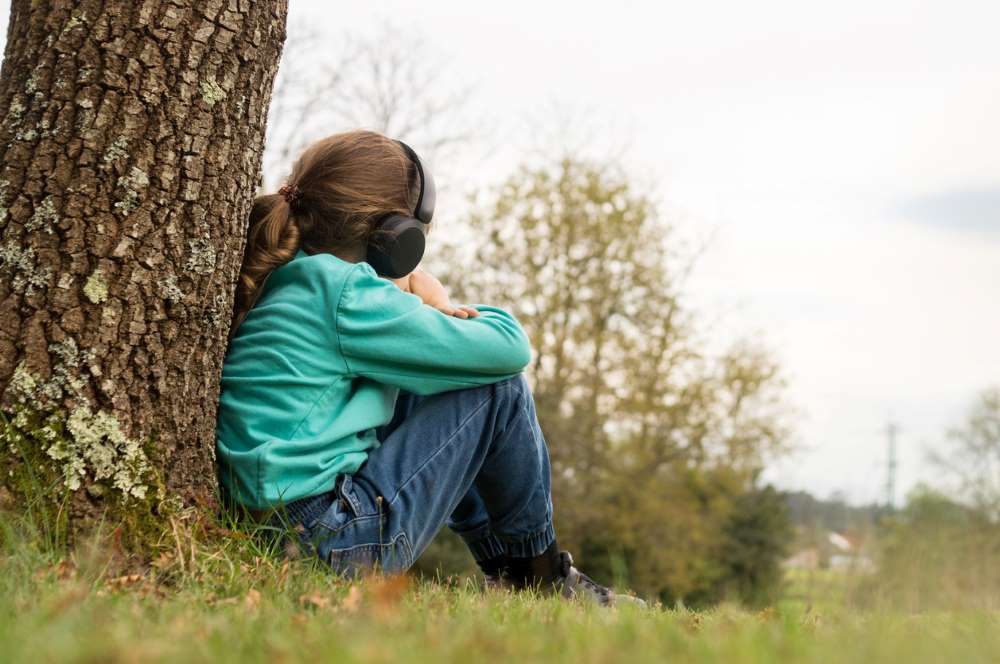
The relationship between autism and auditory processing is complex and multifaceted. Auditory processing differences can influence how autistic individuals experience sound, which in turn may shape social communication, attention, and behavior.
In some cases, these differences may intensify certain autistic traits such as sensory sensitivities, repetitive behaviors, or challenges in social interaction. Understanding these interactions can provide important context for interpreting behavior and identifying appropriate supports.
Sound Sensitivity and Autism
Autistic individuals commonly identify sound sensitivity as one of their most challenging sensory challenges (Wada et al., 2023). Auditory hypersensitivity, also known as decreased sound tolerance (DST), can present itself in multiple forms, including:
- Phonophobia - Having an intense fear of encountering a specific sound type (Williams et al., 2021)
- Misophonia - Hearing specific sounds triggers strong emotional reactions such as anger or disgust (Aldakhil & Shaik, 2025)
- Hyperacusis - Having the auditory processing system amplify sounds to the point of feeling pain or being distressed (Carson et al., 2024)
These experiences can go beyond discomfort. Research suggests that persistent sound sensitivities may affect higher-level cognitive processes, including attention and social communication, and may also contribute to emotional dysregulation and sleep disturbances (Gonçalves & Monteiro, 2023; Poulsen et al., 2024).
Speech-In-Noise Challenges
Auditory filtering—the ability to focus on relevant sounds while ignoring background noise—can be particularly challenging for autistic individuals. This skill is essential in everyday environments, especially in classrooms or social settings where multiple sounds occur at once.
Research suggests that early differences in auditory filtering can have long-term effects. A longitudinal study that followed children initially aged 3, 6, and 9 found that those with atypical auditory filtering abilities were more likely to experience later challenges with adaptive functioning, as well as increased disruptive behaviors (Lau et al., 2023).
The type of background noise also plays an important role. A Dutch study examining speech perception found that autistic children and adolescents had greater difficulty identifying individual words when background noise consisted of speech rather than non-speech sounds. In other words, environments with multiple people talking, such as classrooms or group settings, can make it especially difficult to distinguish between overlapping conversations (Ruiz Callejo et al., 2023).
Together, these findings highlight how auditory filtering differences can affect both learning and social participation, particularly in environments with competing streams of sound.
Autistic Perception and Auditory Discrimination
Auditory discrimination is the ability to notice and describe differences between sounds, such as changes in pitch, rhythm, or volume.
Studies using brain-based measures like magnetoencephalography (MEG) and electroencephalography (EEG) show that when sounds change, most people also show corresponding changes in brain activity. However, some autistic individuals show reduced or no response to these changes, which may make it harder to adapt to or predict new sounds (Rotschafer, 2021).
At the same time, auditory perception in autism is not always impaired. Some research suggests that autistic individuals may be more sensitive to non-linguistic sounds, such as pitch, while processing speech differently. One hypothesis is that speech may not be prioritized in the same way as other sounds (Hisaizumi & Tantum, 2024).
These differences can also be linked to strengths. Some autistic individuals show strong pitch detection and memory for sounds, particularly when paired with strong cognitive or verbal abilities (Gonçalves & Monteiro, 2023; Ong et al., 2024). There is even evidence that some individuals acquire aspects of a second language through passive exposure, such as watching videos, rather than direct interaction (Dumont et al., 2024).
Linking Auditory Processing Challenges and Autistic Traits
Determining whether a person is autistic, has auditory processing challenges, or both typically begins with a comprehensive evaluation, starting with an autism assessment. Tools such as the CARS2, SCQ, and TOD provide insight into social communication, sensory processing, and language-based learning differences.
Using multiple assessments helps professionals look beyond surface-level behaviors and identify underlying causes. This is especially important given that co-occurring learning differences, such as dyslexia, are not uncommon (Arce, 2025).
A clearer understanding of how auditory processing and autistic traits interact leads to more accurate support. It also helps shift perceptions by reducing stigma and ensuring individuals are understood in the context of their sensory and learning needs.
Resources
Aldakhil, A. F., & Shaik, R. A. (2025). Misophonia in autism: A systematic review of prevalence, clinical features, and comorbidities. Research in Developmental Disabilities, 161, 105005. https://doi.org/10.1016/j.ridd.2025.105005
Arce, J. (2025, November 21). Exploring the link between dyslexia and autism. Autism Parenting Magazine. https://www.autismparentingmagazine.com/link-between-dyslexia-and-autism
Carson, T. B., Guerrero, L. A., Niebles, M., & Gayle, C. G. F. (2024). Modified cognitive behavioral therapy approach reduces loudness discomfort levels for an autistic child with hyperacusis: case report. Frontiers in Psychiatry, 15, 1440624. https://doi.org/10.3389/fpsyt.2024.1440624
Dumont, C., Belenger, M., Eigsti, I. M., & Kissine, M. (2024). Enhanced pitch discrimination in autistic children with unexpected bilingualism. Autism, 17(9), 1844–1852. https://doi.org/10.1002/aur.3221
Gonçalves, A. M., & Monteiro, P. (2023). Autism spectrum disorder and auditory sensory alterations: A systematic review on the integrity of cognitive and neuronal functions related to auditory processing. Journal of Neural Transmission, 130(3), 325–408. https://doi.org/10.1007/s00702-023-02595-9
Hisaizumi, M., & Tantam, D. (2024). Enhanced sensitivity to pitch perception and its possible relation to language acquisition in autism. Autism & Developmental Language Impairments, 9, 23969415241248618. https://doi.org/10.1177/23969415241248618
Lau, B. K., Emmons, K. A., Lee, A. K. C., Munson, J., Dager, S. R., & Estes, A. M. (2023). The prevalence and developmental course of auditory processing differences in autistic children. Autism Research, 16(7), 1413–1424. https://doi.org/10.1002/aur.2961
Ong, J. H., Zhao, C., Bacon, A., Leung, F. Y. N., Veic, A., Wang, L., Jiang, C., & Liu, F. (2024). The relationship between autism and pitch perception is modulated by cognitive abilities. Journal of Autism and Developmental Disorders, 54(9), 3400–3411. https://doi.org/10.1007/s10803-023-06075-7
Poulsen, R., Williams, Z., Dwyer, P., Pellicano, E., Sowman, P. F., & McAlpine, D. (2024). How auditory processing influences the autistic profile: A review. Autism Research, 17(12), 2452–2470. https://doi.org/10.1002/aur.3259
Rotschafer S. E. (2021). Auditory discrimination in autism spectrum disorder. Frontiers in Neuroscience, 15, 651209. https://doi.org/10.3389/fnins.2021.651209
Ruiz Callejo, D., Wouters, J., & Boets, B. (2023). Speech-in-noise perception in autistic adolescents with and without early language delay. Autism Research, 16(9), 1719–1727. https://doi.org/10.1002/aur.2966
Wada, M., Hayashi, K., Seino, K., Ishii, N., Nawa, T., & Nishimaki, K. (2023). Qualitative and quantitative analysis of self-reported sensory issues in individuals with neurodevelopmental disorders. Frontiers in Psychiatry, 14, 1077542. https://doi.org/10.3389/fpsyt.2023.1077542
Williams, Z. J., He, J. L., Cascio, C. J., & Woynaroski, T. G. (2021). A review of decreased sound tolerance in autism: Definitions, phenomenology, and potential mechanisms. Neuroscience and Biobehavioral Reviews, 121, 1–17. https://doi.org/10.1016/j.neubiorev.2020.11.030