



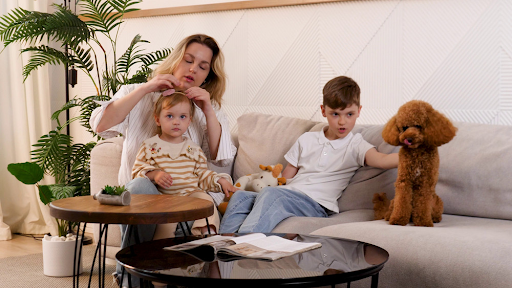
A family home has to accommodate different needs at the same time. Children need spaces where they can play, learn, and relax, while pets also require attention and care. Creating a household that works well for everyone involves thinking about the furniture, routines, and outside services that support daily life.
Families can approach these decisions with both immediate and long-term needs in mind. From choosing furnishings that can remain useful as children grow to making room for pet care and considering appropriate environments for young children, thoughtful planning can make everyday life easier to manage.
Making Room for Pet Care
Pets can be an important part of family life, but caring for them also requires planning. Families may need to account for veterinary appointments, unexpected health concerns, and the time involved in making sure an animal receives appropriate attention. Having a plan for pet care can help households incorporate animals into their routines while recognizing that veterinary services can also be busy.
According to Instinct Science, veterinary practices primarily responded to workload demands in 2024 by increasing overtime hours among staff, with 56% reporting that change. For families with pets, this information can reinforce the value of thinking ahead about veterinary care and being mindful that appointments may need to fit within busy household schedules.
A pet-friendly home can also benefit from designated areas for food, supplies, sleeping spaces, and other everyday needs. Keeping these items organized can help families create a household where children and pets have room to coexist comfortably.
Choosing Furniture for Family Life
Furniture plays a significant role in how a household functions. A sofa, for example, may become a central place where family members gather, children relax, and pets spend time with the people around them. Because these pieces can remain in a home for years, families may want to consider how their needs could change over time before making a purchase.
According to The Spruce, sofas purchased today generally have an expected lifespan of seven to 15 years. That timeframe can encourage families to think beyond their immediate needs when selecting furniture and consider whether a piece will continue fitting their household as children grow and routines change.
Families can also think about how furniture will be used throughout the day. A comfortable arrangement can give children a place to read or play while providing adults with a shared space to unwind. When pets are part of the household, families may also consider how furniture placement affects the animals' ability to move through the home.
Creating Supportive Spaces for Young Children
A family-friendly home is not only about physical furnishings. The environments children spend time in can also shape how parents think about routines, supervision, and the support available to young family members.
For families using child care, understanding recommended caregiver ratios can be another consideration. According to ZeroToThree, one adult for every four children under the age of three is the recommended ratio for center-based settings. Families can keep this guidance in mind when evaluating environments for young children and considering how much individual attention may be available.
At home, families can similarly think about creating spaces that allow children to be supervised and supported during everyday activities. Clear areas for play, accessible belongings, and routines that account for the child's age can help the household function more smoothly.
A home shared by children and pets requires thoughtful planning because everyone's needs can change over time. Families can consider how they organize pet care, choose furniture, and create supportive environments for young children when shaping their living spaces. With these considerations in mind, a home can become a place that accommodates the practical needs of both children and pets while remaining comfortable for the entire household.