



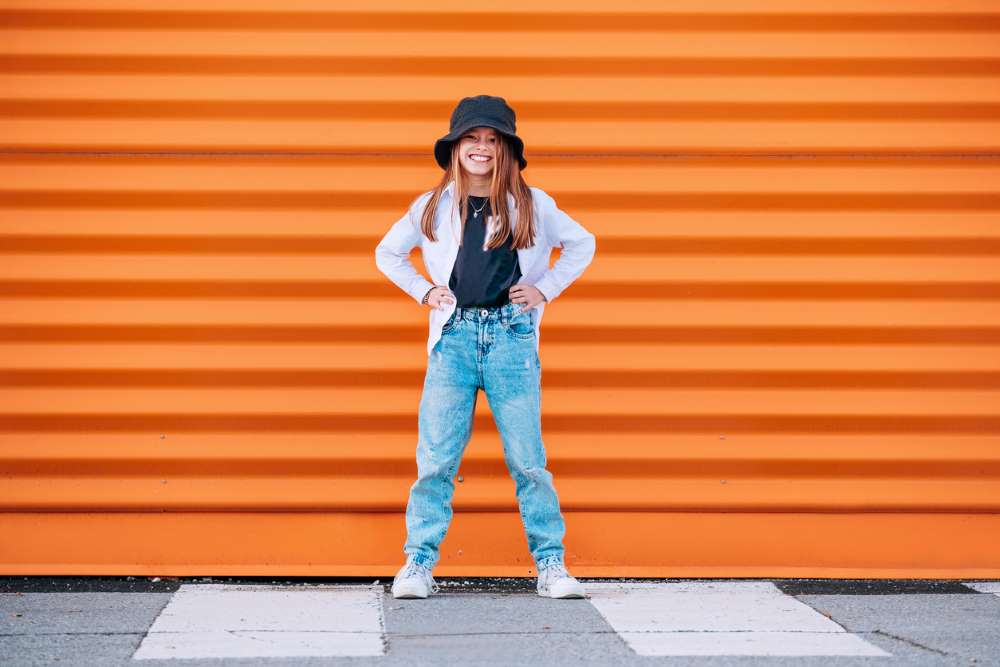
Your kid can sprint across the playground in sweatpants without a second thought. Put them in a stiff pair of jeans, and they’re tugging at the waistband before recess. The CDC recommends that kids ages 6 to 17 get at least 60 minutes of moderate-to-vigorous activity every day, and much of that happens in whatever they wore to school.
Jeans can keep up with all of it. The right pair comes down to a few details you can check in the store or in your living room: the waist, the fabric, the cut, and how the seams are built.
Start at the Waistband
Most jeans complaints begin at the waist. A metal button and zipper are hard for small hands, slow during a bathroom rush, and press into the stomach when a child sits cross-legged for circle time.
For toddlers and kids still building fine-motor skills, an elastic or drawstring waist lets them pull their pants up and down on their own. Older kids benefit too. A waist with some give lets them squat, climb, and bend without the band cutting in.
A drawstring adds adjustability. A kid who shoots up in height but stays narrow through the middle can wear the size that fits their legs, and you cinch the waist to match.
Some brands now build their denim around this. Firebird Kids makes every pant with a drawstring waist and no buttons or zippers, including The Studio Denim Pant, a five-pocket jean in organic Japanese denim with a relaxed fit, sized 2-3T through 12-13. For kids who hate jeans because of the waistband, that design removes the main complaint.
Look Closely at the Fabric
Some denim is stiff and rigid, and some feels closer to a sweatshirt. Two things decide where a pair lands: what the fabric is made of and how it was finished before it reached the store.
Stretch denim blends cotton with a small percentage of elastane or spandex. That give helps with climbing and squatting. The trade-off is recovery. After many washes and dryer cycles, stretch fibers can lose their snap, and the knees and seat start to bag.
All-cotton denim avoids that problem. Well-made 100% cotton denim that has been washed and softened before sale can feel comfortable from the first wear, and it keeps softening as you wash it. Rub the fabric between your fingers in the store. If it feels like cardboard to you, your child will feel it too.
Weight matters as well. Heavy denim stands up to knees on pavement but can feel stiff and hot on a warm afternoon. Mid-weight denim is the practical choice for everyday play.
If your child has sensitive skin, look for certified organic cotton, such as fabric certified to the Global Organic Textile Standard (GOTS), which limits the chemicals allowed in growing and processing.
Choose a Cut That Moves
Skinny and slim cuts look neat on a hanger, but they fight a deep squat or a high step onto the monkey bars. For active kids, a relaxed, straight, or loose tapered leg gives room through the seat and thighs, where denim pulls hardest.
Check the rise, too. A low rise slips down when a child bends over, and a rise that’s too high can dig in when they sit. A mid rise that sits at the natural waist stays put through cartwheels and car rides.
Then look at the hem. Jeans that pool over sneakers catch under heels and trip kids on stairs. A hem that just reaches the top of the shoe, or a cuff you can roll and unroll as they grow, keeps them on their feet.
Check the Construction
Active kids wear out jeans in predictable places: the knees, the inner thighs, the back seam, and hems that drag on the ground. A few minutes of inspection tells you how a pair will hold up.
-
Seams: Look for even, dense stitching with no loose threads. Double-stitched seams along the inseam and seat hold up better to squats and slides.
-
Stress points: Small reinforcing stitches, called bar tacks, at the pocket corners and belt loops keep those spots from tearing.
-
Knees: For kids who crawl, kneel, and slide into bases, a sturdier denim or a double-knee design buys more time before the first hole.
-
Inside the waistband: Run your hand along the inside. Bulky seams, scratchy labels, and exposed metal bother kids with sensory sensitivities, and they’ll tell you by refusing to wear the jeans.
Size for Growth Without Going Too Big
Buying a size up so jeans last two seasons is tempting. A little room is smart, but too much means a sagging seat and hems that trip. Size by height first, since length is the part you can’t adjust, and let an adjustable waist handle the rest.
Many school-age kids grow about two to three inches a year, so plan on checking fit each fall. If your child sits right between sizes or is mid-growth spurt, the larger size with a cinched waist and a rolled hem usually works better than a smaller pair squeezed tight.
Do the At-Home Movement Test
A pair that fits standing still can fail the first time your kid drops into a squat. Before you cut the tags, have them try these moves:
-
A full squat, all the way down
-
Sitting cross-legged on the floor
-
A high-knee step, like climbing a playground ladder
-
A run down the hallway and back
If the waist digs in, the seat pulls down, or they stop to tug at anything, return the jeans while you still can.
Ask for their verdict, too. By around age 8, many kids have firm opinions about what they’ll wear. Jeans they help choose are jeans they’ll put on without a morning negotiation.
Adjust for Your Child’s Age
Toddlers need jeans they can manage alone during potty training. At this age, a pull-on waist matters more than any other feature, and soft fabric keeps them comfortable through naps and car seats. They also spend a lot of time on their knees, so sturdy denim pays off quickly.
From about age 6 to 8, school sets the demands. Jeans have to survive recess, gym class, and hours at a desk, and kids want to get dressed fast on busy mornings.
Kids 9 and older care more about how their jeans look. A relaxed five-pocket style reads as regular jeans to their friends while still giving them room to move, which keeps comfort in the rotation without an argument.
Care That Keeps Jeans Comfortable
Washing habits affect how soft jeans stay. Turn them inside out and wash in cold water to slow fading and reduce wear on the surface. Follow the drying instructions on the label, and skip high heat, which can shrink cotton and wear out stretch fibers faster.
Jeans also don’t need washing after every wear unless they’re muddy. Fewer washes keep the fabric softer and the color deeper, and a well-kept pair is easier to hand down to a younger sibling or resell once it’s outgrown.
Finding the Pair Your Kid Will Wear
Comfortable jeans for active kids come down to a short checklist: an elastic or drawstring waist, soft mid-weight denim, a relaxed cut with a mid rise, reinforced seams, and a hem that clears the shoe. Size by height and use the waist for fine-tuning.
Bring that list to the store, run the squat-and-sprint test at home, and let your kid weigh in before the tags come off. A pair that passes all three is one they’ll reach for on school days and park days alike.