



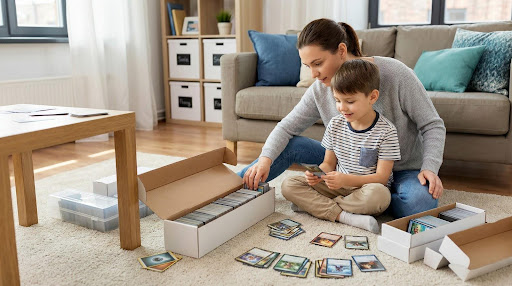
Remember stepping on a stray Pokémon card, wincing, then spotting five more under the coffee table? We’ve all been there.
The fix is simple: give those cards a real home. Over the last 30 days we talked to hobby-shop owners, polled parents, and road-tested a dozen boxes with real kids. The pattern was clear—proper storage makes youngsters treat both cards and house better.
Ahead, you’ll see three proven solutions: a wallet-friendly “monster” box, a stylish mid-range case, and a vault-like premium pick. Choose the one that fits your budget and shelf, and reclaim your living room.
Why proper trading-card storage matters
Cards spread fast. One booster pack becomes a desk pile, then a floor pile, then a paper avalanche. GamesRadar writer Benjamin Abbott jokes that his decks now “fill every surface, threatening to bury me” (GamesRadar).
That mess is more than visual clutter. Exposed corners bend, foils curl in humidity, and dust embeds in card stock. When that happens, resale value drops and a prized holo loses its sparkle.
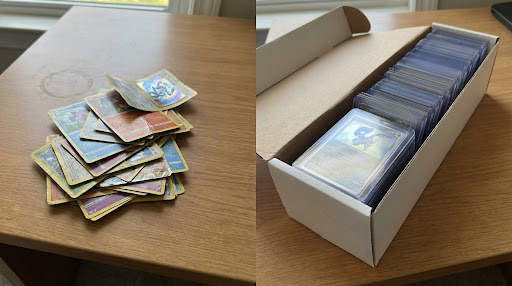
A dedicated box fixes both problems. When kids know exactly where their Pokémon or sports cards live, they slide them back in after play, just like books on a shelf. Cleanup becomes routine, not a chore.
Protection matters too. A snug box blocks sunlight, stops juice-box splashes, and keeps heavy textbooks from crushing top loaders. Even penny-sleeved commons last longer when they stand upright instead of bouncing around a shoebox.
Think of the box as mini insurance. You spend a few dollars now to preserve cards that could be worth hundreds later if your child pulls a rare Charizard or rookie card.
Most important is peace of mind. You get a clear coffee table, and your child gets a collection that feels special, not scattered. Everyone wins.
Budget pick: corrugated cardboard “monster” box
The monster box is the workhorse of trading-card storage. It is plain, inexpensive, and surprisingly roomy—the cardboard equivalent of a reliable minivan.
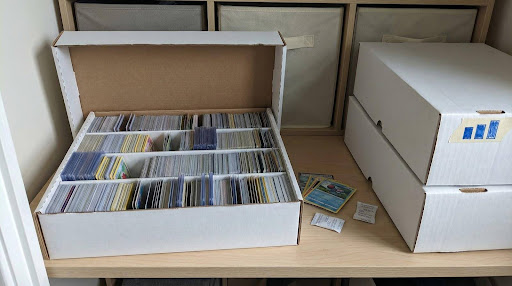
For less than a fast-food lunch, a standard four-row “3,200-count” version holds about 3,200 loose cards or roughly 2,400 sleeved ones in a footprint no bigger than a pair of high-tops (Pixelfy). Capacity is only half the story. The rows keep cards upright so corners stay crisp, and the snug lid blocks light and household dust. Because the board stock is acid-free, ink will not yellow over time. Add a silica packet, store the box on a closet shelf, and you have a climate-friendly vault for spare change.
Kids like monster boxes because they are light. Even a first-grader can lift one without spilling a mountain of commons onto the carpet. The lid lifts straight off—no latches—so cleanup is quick.
Parents like them because they stack. Two or three boxes line up neatly in a cubby, and a strip of masking tape on the end becomes an instant label. Many families turn labeling into an art project, letting kids decorate each box by set or Pokémon type.
Drawbacks are predictable. Cardboard hates water, and the walls can bow if you overfill the rows. Both issues are easy to avoid: keep drinks away from the storage zone, and add a second box when rows start to bulge.
If your child rips booster packs every weekend, start here. The monster box tames clutter at pocket-money cost and leaves room in the budget for sleeves, top loaders, or the sleeker case up next.
Mid-range pick: multi-row deck case with dividers
Cardboard stops the chaos, but style and portability start to matter once kids trade on the go. That is where a deck case shines.
Picture a small briefcase wrapped in faux leather, stitched in bright colors, and lined with soft felt. Open the magnetic lid and you will find three or four tidy channels, each separated by a clear divider. One slot holds a favorite battle deck, another keeps trades, and a third stores spare sleeves.
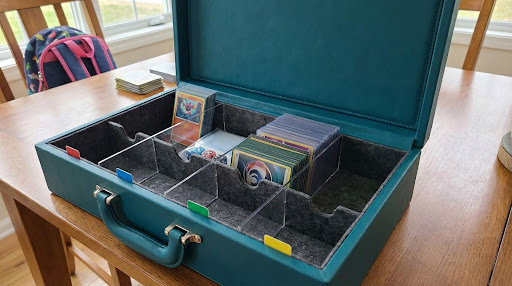
Capacity suits weekend play. A typical four-row model fits about 1,600 sleeved cards—plenty for an active collection without turning the case into a dumbbell. Reinforced walls keep stacks straight even when the box rides in a backpack or the back seat on the way to Grandma’s.
That magnetic lid is the star. It snaps shut with a quiet click, strong enough to survive a tumble yet easy for small hands to open. No clips, no keys, no chance of pinched fingers. Close it and you hear instant feedback that the treasure inside is safe.
Dividers earn equal praise. Color-coded tabs let kids label sections by Pokémon type, sports team, or deck theme. When trading starts, they pull the right stack without rifling through a brick of mixed cards.
Looks matter, too. Where a monster box hides under a bed, a deck case begs for display. Glossy reds, neon blues, even clear windows that frame a holofoil—pick the finish that matches your child’s style and you will see pride replace clutter.
Price lands in the friendly middle. Expect thirty to fifty dollars depending on size and brand. It is a noticeable step up from cardboard but far below the cost of a hard-shell vault.
Any caveats? Weight rises as rows fill, so younger kids may need help once loaded. And capacity, while solid, cannot match a five-row monster box. Many families keep bulk commons in cardboard and reserve the deck case for prized or in-rotation cards.
In short, the multi-row deck case turns a pile of cards into a portable, showcase-ready kit. If your child trades at recess or fine-tunes decks for Friday-night matches, this upgrade keeps the hobby fun and the living room floor clear.
Premium pick: heavy-duty collector’s case
Sometimes a card is more than cardboard. It is a graded rookie, a signed holo, or a keepsake you plan to hand down. For those gems, convenience takes a back seat to fortress-level safety.
A premium collector’s case looks like camera gear, not a toy box. Thick polymer walls shrug off drops, and a rubber gasket keeps out dust and moisture. Inside, adjustable foam cradles raw cards, sleeved decks, and PSA slabs without wiggle room. The four-row Card Case featured on VaultedCollection.com/ fits 112 PSA slabs (or roughly 80–110 graded cards from other brands) inside an archival-safe shell and sells for about $180.
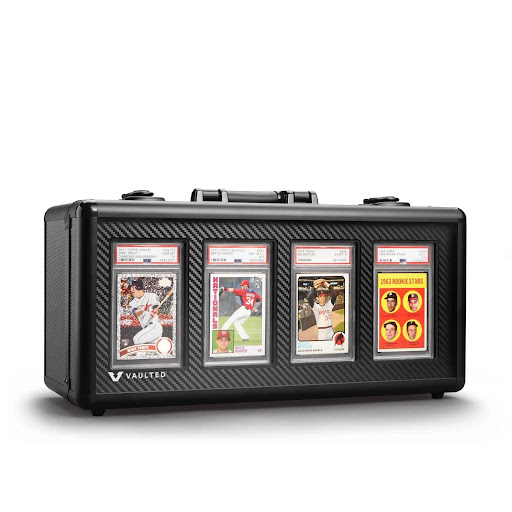
Four-row premium graded card collector case with PSA slabs
Security goes beyond padding. Dual latches clamp tight, some versions include a combination lock, and the full box has enough heft to stay put on a shelf. That weight is a feature, not a flaw; it discourages casual handling and keeps younger siblings from turning an investment into a plaything.
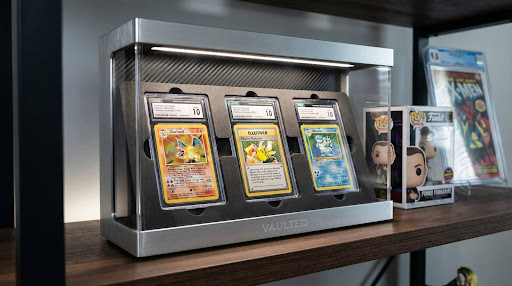
VaultedCollection.com PSA card case product page screenshot
The case also grows with the hobby. Today your child stores commons and a few top loaders. Tomorrow they may grade a championship Pikachu or a serial-numbered rookie. Re-configure the foam and keep collecting.
Looks stay understated—matte black, brushed aluminum, maybe a subtle logo. On a bookshelf the case blends in with photo albums and tech gadgets but feels ceremonial every time you open it.
The sticker price can cause pause until you compare it to the value inside; one mint Charizard often covers the cost twice over. Store the case low so lifting is easy, add a silica packet for humidity control, and consider water-resistant models if fire safety is a concern.
Choose the heavy-duty case when the collection shifts from hobby to heirloom. It delivers museum-grade security, quiet peace of mind, and a bit of ceremony with every click of the latch.
Conclusion: How to choose the right box
Picking a storage box is easier when you walk through five quick checks. Do that once and the best option usually reveals itself.
First, capacity. Count the cards on hand, then add room for growth. If your child already owns one thousand, moving straight to a 3,200-count monster box saves headaches later.
Second, protection level. Commons headed for playground trades survive in cardboard, while foils, autographs, or graded slabs belong in a padded premium case. Match material to card value and household risk; pets, younger siblings, and juice spills all raise the bar.
Third, accessibility. Ask how often the collection comes out to play. Daily deck-builders want the instant reach of a deck case with dividers. Long-term sets that surface only on rainy Sundays can rest undisturbed in a taped-shut monster box.
Fourth, portability. Will the cards travel to school, tournaments, or vacation? Lightweight deck cases slide into backpacks without drama, while heavy vaults stay parked on a shelf and out of harm’s way.
Finally, space and looks. Measure the shelf, cubby, or under-bed gap before ordering a five-row beast. If the box will live in plain sight, style matters. A leather-wrapped case in a favorite color keeps kids proud to use it, which keeps floors clear.
Run through these five checks and you will know whether to spend five dollars or one hundred eighty, whether to prioritize capacity or carry handles, and whether the next box you buy ends card chaos for good.