



If your preschooler fights bedtime, survives on beige foods, or has a meltdown because their sock “feels wrong,” you are not dealing with a difficult child. You are dealing with a young child whose body and brain are still learning how to manage the day. That does not make it easy. It just means there is a reason behind some of the chaos.
For parents looking into preschool in Parker, CO, the question often goes beyond ABCs and classroom activities. In a family-heavy area like Parker, where many children move between home routines, school schedules, parks, errands, and busy evenings, parents want to know if preschool can help their child feel more balanced. Can it support sleep? Can it make meals less stressful? Can it help a child calm down faster?
The honest answer is yes, preschool can help. Not like a switch. Not in three days. But the right routine can support the habits that make children feel safer, steadier, and more ready for the day.
Preschool Gives Your Child a Predictable Daily Rhythm
Young children may resist routines, but they usually feel better with them. A preschool day has a clear order: arrival, play, snack, group time, outdoor time, lunch, rest, more play, and pickup. After a while, your child does not have to guess what is coming next.
That matters because guessing takes energy. When a child knows the pattern of the day, their body can relax a little. They may still cry at drop-off. They may still have tired afternoons. But over time, the routine becomes familiar. Familiarity often feels safe.
Better Days Can Lead to Better Sleep
Sleep problems do not always start at bedtime. Sometimes they start much earlier in the day. A child who has not moved enough may still feel restless at night. A child who has had too much noise, too many screens, or too many rushed transitions may feel wired even when they are exhausted.
Preschool can help by giving children a full day of real activity. They climb, run, build, carry, dance, paint, listen, talk, wait, and solve small problems. That kind of day uses both the body and the brain.
By evening, some children are more ready to rest because they have had enough movement, enough connection, and enough structure. Bedtime may not become perfect, but it can become less of a battle.
Mealtimes Can Feel Less Pressured
Picky eating is one of those parenting issues that can make you feel personally defeated. You make the food. They reject the food. You try not to react. They somehow react to your reaction anyway.
At preschool, food can feel different. Children eat near other children. They see classmates trying fruit, crackers, soup, rice, vegetables, or whatever is packed or served that day. No one is begging them to take “just one bite.” The pressure is usually lower.
That can help. A child may touch a food before tasting it. They may smell it one week and nibble it the next. They may eat something at school that they refuse at home. Annoying? Yes. Normal? Also yes.
Preschool Builds Small Mealtime Skills
Eating is not only about food. It is also about independence. At preschool, children practice opening containers, sitting with a group, asking for help, drinking from a cup, cleaning small spills, and knowing when they are full.
These skills matter because they give children a little control. And children who feel capable often feel calmer. They may not suddenly eat everything on the plate, but they may become less tense around meals.
For many families, that is already a win.
Calm Comes From Practice, Not Lectures
A calmer child is not a child who never cries, shouts, grabs, or falls apart. Preschoolers are still learning how feelings work. They do not become calm because an adult explains calmness once. They become calmer through practice.
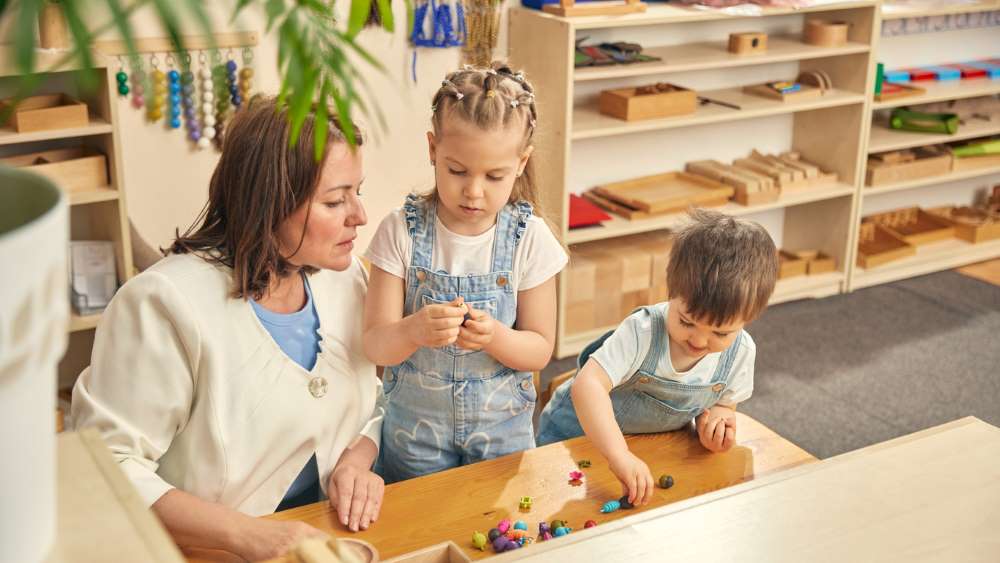
Preschool gives them that practice all day. Someone takes the toy they wanted. They have to wait for the swing. They miss you. They spill water. They lose a game. They feel shy during circle time. In those moments, a steady teacher can help them name the feeling, breathe, ask for help, or try again.
Over time, children learn something important: “I can be upset and still be okay.”
The Home Connection Still Matters
Preschool can support sleep, eating, and emotional regulation, but it works best when home and school are not pulling in opposite directions. You do not need a perfect home routine. You just need a few steady points your child can count on.
A simple bedtime order helps. So does a predictable dinner routine, even if dinner is not fancy. Short goodbyes at drop-off can help more than long emotional ones. Talking with teachers also matters. Ask what helps your child settle at school. You may get practical ideas that work at home, too.
Wrapping Up: Look for Small Signs, Not Overnight Change
Preschool will not erase bedtime struggles, picky eating, or big feelings. Those are normal parts of this age. But it can help your child build the daily habits behind better sleep, easier meals, and calmer behavior.
Look for small signs. Your child falls asleep ten minutes sooner. They try a food because a friend ate it. They say, “I need help,” instead of throwing something. They recover faster after crying. These changes may look small from the outside, but they are not small inside your child.
They are signs that your child is learning how to manage their body, their hunger, their tiredness, and their feelings. And that is one of the most useful things preschool can give them.