



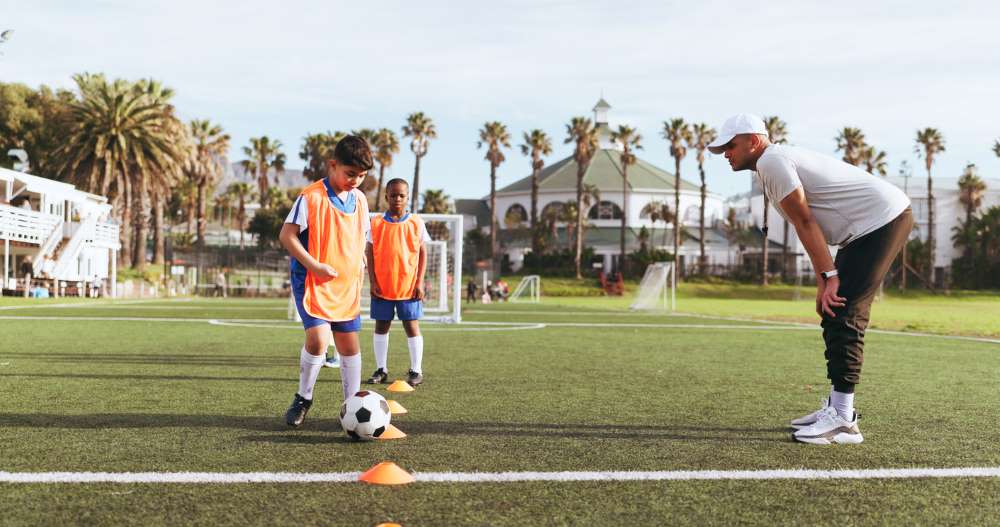
Saturday morning, 9 a.m. Two folding chairs down, a dad springs to his feet, veins bulging, and yells "SWITCH SIDES!" at his eight-year-old daughter mid-game in a rec-league match. She freezes mid-run, glances at the sideline, and loses the ball. Her shoulders drop. She doesn't even chase it back.
Every soccer parent starts in the same place: a real love for their kid and a genuine wish to see them grow. You sign them up, buy the cleats, rearrange your weekends. The intention is pure. Yet the line between a supportive parent and an overbearing one is far thinner than most people think, and most cross it without noticing.
Here's a no-nonsense guide to helping your child actually improve on a field. It runs through understanding what good coaching looks like, knowing where your role starts and stops, and resisting the urge to turn every game into a lecture nobody asked for.
Understand your role versus the coach's
The coaching staff handles tactics, technique, formation and in-game decisions. Your job covers emotional support, logistics and encouragement. Nothing more. The moment you start barking positioning instructions or contesting a substitution in real time, you blur a boundary your child needs.
Put yourself in their shoes for a second. They hear their coach say "stay wide." Then they hear you shout "come inside!" That split-second hesitation creates confusion, and over a full season, it erodes trust in the coach.
Youth soccer coaching follows a player-centered model, built around individual development rather than chasing the scoreline. Coaches trained in this philosophy make decisions that sometimes puzzle parents, like rotating positions or benching a dominant player to give others minutes, but they serve a bigger goal.
If a decision bothers you, note it. Wait until after the game, then raise it privately. A calm conversation on Tuesday evening carries far more weight than a sideline outburst that embarrasses your child and puts the coach on guard.
Put fun ahead of results
Kids who enjoy playing stay in the sport longer and develop more fully. That's not a nice slogan: it's the actual mechanism of learning. Fun fuels repetition, repetition builds mastery, and mastery feeds confidence. Remove the fun, and the whole cycle collapses.
The best coaching philosophies, from Dutch academies to Brazilian youth clubs, treat fun as the foundation of development. Creativity is born from play, never from pressure. When a child feels free to try a move and fail without consequence, they learn faster than one paralyzed by the fear of disappointing a parent.
Stop fixating on scores and standings. Stop comparing your child to the one who scored four goals. After the next game, try a single question: "Did you have fun?" Not "Did you win?" or "How many goals?" That simple shift in conversation tells your child that their experience matters more than the result.
Pressuring for performance is the fastest way to push a kid out of the sport before they even reach middle school. A large share of young athletes quit organized sports before their teens, and parental pressure regularly ranks among the top reasons cited.

Recognize what quality coaching looks like
Knowing how to spot good coaching helps you support it instead of second-guessing it. Most parents never played at a competitive level, so the gap between what they expect and what a trained coach delivers can feel confusing.
Here's what quality youth coaching looks like in practice:
-
Game-based drills that mimic real match situations rather than lines of kids waiting to kick a ball
-
Encouragement of creativity, where players solve problems on the field instead of memorizing rigid patterns
-
An environment where mistakes are allowed, because mistakes are how kids learn at this age
-
Individual feedback given calmly, often during natural breaks rather than shouted across the field
The training pathway for grassroots coaches in the U.S. takes time and commitment. Licensed coaches invest in clinics, mentoring and continuing education. When the coach lets your child wrestle with a skill instead of feeding them the answer, that's a deliberate choice, a development strategy, not neglect.
Learn about age-appropriate expectations. An under-10 player doesn't need to understand a 4-3-3. They need to dribble with confidence, look up before passing, and enjoy the chaos of small-sided games.
Master what you say on the sideline
Shouting instructions from the sideline is counterproductive, however tactically sharp your observation. When parents and coaches fire off conflicting orders, young players stop thinking for themselves and start scanning the sideline for instructions. That stunts decision-making development at exactly the age it matters most.
Here's a simple guide to keep in mind before every game:
|
Say this |
Avoid this |
|---|---|
|
"Great effort!" |
"Shoot!" |
|
"Keep going!" |
"Pass!" |
|
"Nice try!" |
"Get back!" |
|
Clapping, cheering, smiling |
Any positioning instruction |
|
Praising the opposing team |
Any criticism of the referee |
Several youth leagues have tried silent sidelines, where parents commit to watching without comment for the whole game. Coaches in these programs report that players communicate more with each other, make bolder decisions and visibly enjoy themselves more. The absence of adult noise finally lets the kids play.

Support progress at home without over-coaching
There's a real difference between facilitating practice and imposing drills. Facilitating means creating the conditions for your child to play. Imposing means standing over them with a whistle and a cone plan you found on YouTube.
Free play develops a child far more effectively than parent-led sessions. Juggling in the yard, kicking against the garage wall, improvising a game with neighborhood kids: these activities build touch, spatial sense and creativity like no structured drill will. The greatest players in history, from Pelé to Messi, grew up on street soccer long before they entered an academy.
Keep a ball where your child can grab it on impulse. In the hallway, by the door, in the car. Availability changes everything. Watch pro games together on the couch, and let them observe without commentary on every play. If they ask a question, answer it. Otherwise, let the game teach.
One last thing: stop turning the car ride home into a tactical debrief. Your child just ran and competed for an hour. They need water and a snack, not a performance review. Save your remarks for another day, or better, leave them entirely to the coach.
Build a healthy relationship with your child's coach
See the coach as a partner, not someone to work around. Come to parent meetings. Offer to carry equipment or organize the snack rotation. These small gestures signal respect for their time and set a collaborative tone around the team.
If your child isn't getting much playing time, ask the coach a single question: "What can they work on to earn more minutes?" That framing opens a constructive exchange. Asking "Why isn't my son starting?" puts the coach on the defensive and almost never leads anywhere.
Good youth coaching means rotating positions and spreading development opportunities across the whole roster, even when it costs wins. A coach who plays every kid in several positions builds complete athletes; they aren't sabotaging the season. Trust the process.
Avoid huddling with other parents to quietly criticize the coach's decisions. That toxic dynamic trickles down to the players faster than you'd think. Kids pick up on resentment, gossip, negativity. They internalize it. Before long, the team's culture reflects the parking-lot conversations more than the ones at practice.
Keep the long game in mind
The overwhelming majority of young soccer players will never sign a professional contract. Fewer than 1% reach that level. And that's perfectly fine, because soccer offers something far more durable than a career.
The sport teaches discipline and resilience. It teaches kids to work with people they didn't choose, to take a loss without falling apart, to show up on a freezing Tuesday evening when they'd rather stay warm. Those skills outlast any trophy.
Early specialization and intense parental pressure before adolescence are linked to higher rates of burnout and dropout. A child pushed too hard at nine rarely becomes a passionate player at sixteen. They become a former player who associates the sport with stress.
Measure success differently. Ask yourself an honest question at the end of each season: does my child still want to play next year? If the answer is yes, you're doing it right. Trophies gather dust. A child who genuinely loves stepping onto the field, season after season, that's the real win. Drive them to practice, cheer from the sideline, and let qualified coaches handle the rest. They'll thank you for it.