


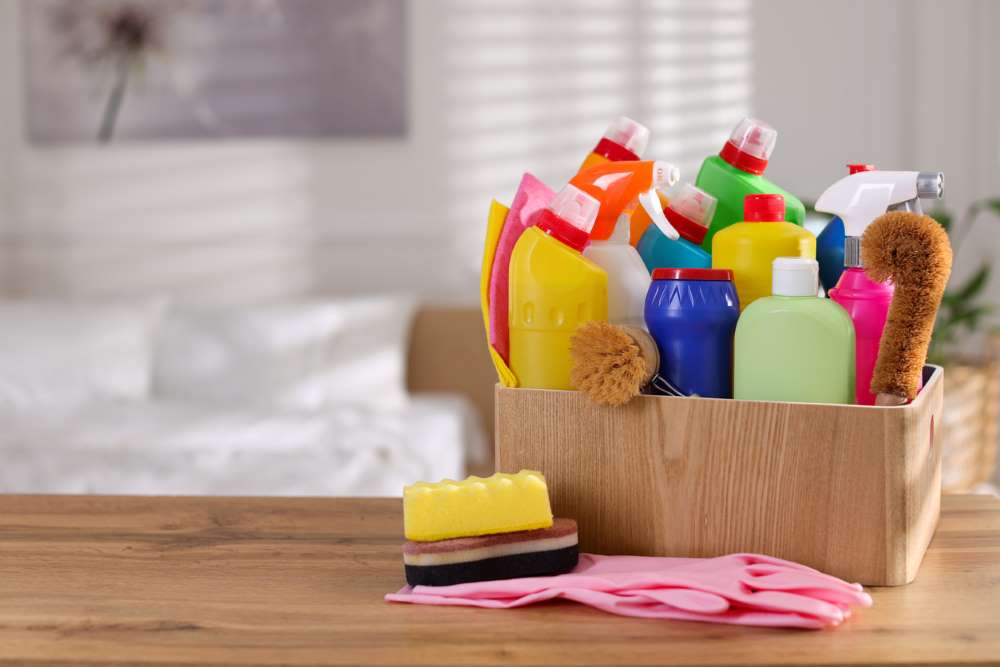
Children are naturally curious, and everyday household products can easily attract their attention. Cleaning supplies, detergents, automotive fluids, and lawn care products often come in colorful containers or have appealing scents, but many contain ingredients that can be harmful if touched, swallowed, or mixed. Safe storage habits help reduce the risk of accidental injuries.
Store Chemicals Out of Reach
The safest place for household chemicals is in a locked cabinet or on a high shelf that young children cannot access. Products should always remain in their original containers because the labels provide important safety information and usage instructions.
Avoid transferring chemicals into food or drink containers. A child may mistake a clear liquid in a juice bottle or water bottle for something safe to consume. Keeping products in their original packaging helps prevent dangerous confusion.
Teach Children Basic Safety Rules
Children should learn that cleaning products are tools for adults, not toys. Explain that they should never touch or open bottles without permission, even if they look interesting.
Parents can also teach children to recognize common hazard symbols and encourage them to tell an adult if they find an open container or notice a spill. These simple conversations build lifelong safety habits without creating unnecessary fear.
Handle and Dispose of Products Carefully
Always close lids tightly after using household chemicals and return products to their storage location immediately. Leaving cleaners on counters or floors, even for a short time, increases the chance of accidental exposure.
Never mix different cleaning products unless the label specifically allows it. Certain combinations, such as bleach and ammonia, can create dangerous gases. Expired or unwanted chemicals should be disposed of according to local disposal guidelines rather than poured down household drains unless permitted.
Proper containers and labeling also play an important role in chemical safety. A chemical packaging company helps manufacturers package products in ways that support safe storage, handling, and identification, reinforcing why consumers should keep household chemicals in their original containers and follow the instructions provided on the label.
Make Safety Part of Everyday Life
Household chemical safety is built through consistent routines. Regularly checking storage areas, replacing damaged containers, and reviewing safety rules with children all help reduce preventable accidents.
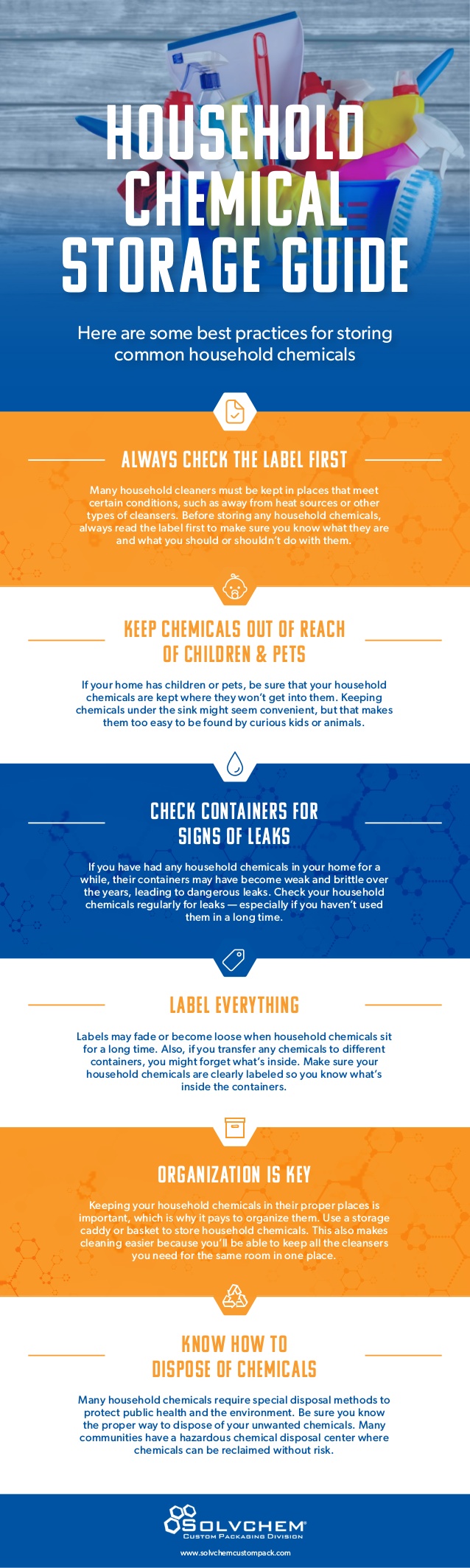
Creating a safe home does not require complicated changes. Storing products properly, following label directions, and encouraging children to ask questions before touching unfamiliar items can significantly reduce everyday risks. These simple habits protect children while helping them develop safe decision-making skills that will benefit them as they grow. Look over the infographic below for more information.