



Few decisions weigh on a parent more than choosing where their toddler spends the day. However, most families still only tour one or two places, skim a brochure, and go with their gut. That approach misses critical details. Knowing which signs separate a strong program from a mediocre one gives you the real edge and ensures unhindered development for your child. Here are the markers worth paying attention to before signing any enrollment form.
A Low Staff-to-Child Ratio That Stays Consistent
Nothing predicts the quality of a toddler's experience quite like the ratio of caregivers to children. Federal guidelines call for lower ratios in younger age groups because infants and toddlers need closer supervision and more individual care.
Most states require one caregiver for every four to six toddlers. But a posted number on the wall only tells part of the story. Visit at different times of day, during drop-off, over lunch, and right before pickup, to see whether those ratios actually hold. This is how you actually end up choosing the right childcare in Albuquerque.
Qualified, Experienced Caregivers
Credentials tell part of the story; behavior tells the rest. On a tour, pay attention to how staff members interact with a toddler who is upset or overwhelmed. Do they crouch down, make eye contact, and speak softly? Or do they redirect from across the room?
Frequent staff turnover is another concern. Toddlers build emotional security through familiar faces, and that bond breaks each time a trusted caregiver leaves. Hence, it also helps to ask the director what professional development looks like at the center. Programs that invest in regular training on topics like positive behavior guidance and early language building tend to retain better educators.
A Safe, Clean, and Stimulating Space
Safety means more than a locked front door. Walk through the toddler room and check for covered outlets, anchored furniture, and cushioned flooring under climbing areas. Cleaning products should be stored well above a child's reach, and the food preparation area should follow visible hygiene practices.
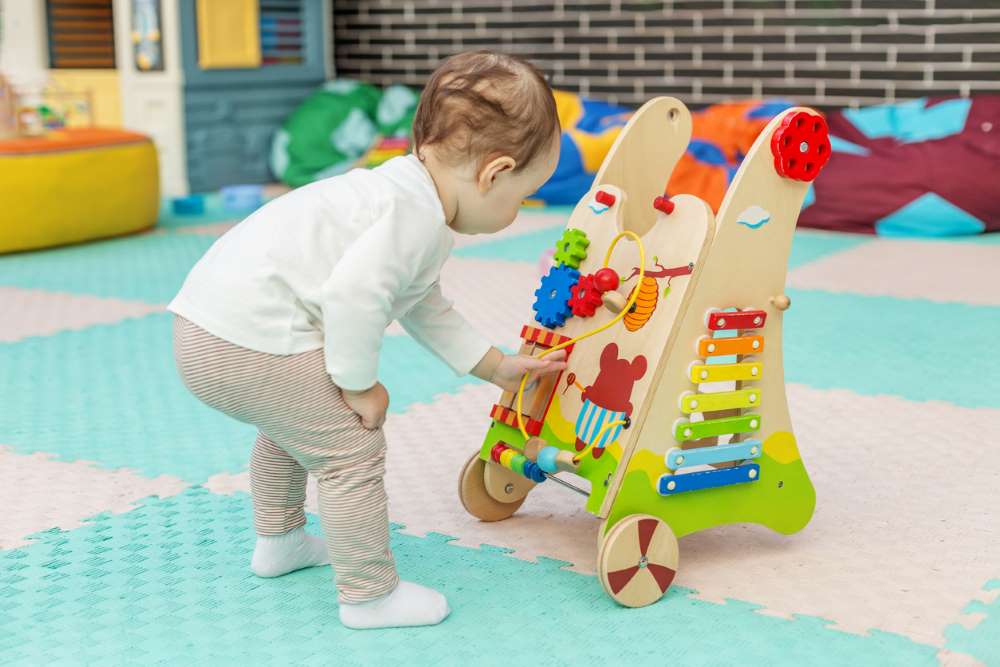
Toddlers learn by touching, stacking, dumping, and pretending. A well-run classroom will have low, open shelves filled with rotating books, blocks, puzzles, and simple art supplies. If the room feels bare, with one toy bin and blank walls, the curriculum probably lacks intention.
A Structured Yet Flexible Daily Routine
Predictability helps toddlers feel secure. Look for a posted schedule that balances free play, guided learning, mealtimes, outdoor exploration, and rest. At the same time, a rigid agenda can work against young children. A two-year-old who discovers a puddle on the playground may need fifteen extra minutes outside, and a tired child should not be forced into circle time.
One of the best questions to ask during a visit: What happens when a toddler refuses to nap or has a meltdown before lunch? The answer reveals whether caregivers adapt to each child or stick to a fixed script regardless of individual needs.
Clear and Open Communication With Parents
Strong programs treat families as partners in a child's growth, not as people who simply drop off and pick up. Daily updates, sent through an app or written on paper, should cover meals eaten, diaper changes, mood shifts, and new milestones. Illness protocols, discipline approaches, pickup rules, and fee breakdowns should all be documented and handed over before enrollment. Any reluctance to share a parent handbook upfront deserves scrutiny.
Outdoor Time and Physical Activity
Toddlers are built to move. A solid program offers daily outdoor play in a fenced, shaded space with climbing structures designed to accommodate their small bodies. When rain or extreme heat keep everyone indoors, there should be a backup plan: obstacle courses, music and movement sessions, or large-motor games with soft equipment that let children burn energy safely.
Ending Note
Finding the right childcare center takes more than a quick walk-through and a friendly first impression. Parents often feel rushed into a decision. Push back against that pressure. Tour at least two or three programs, compare posted ratios to what you observe in person, talk with families already enrolled, and watch how staff respond in stressful moments.
The early years shape a child's language, confidence, and ability to connect with others. A center worthy of that window should meet every benchmark on this list, not just the convenient ones.