



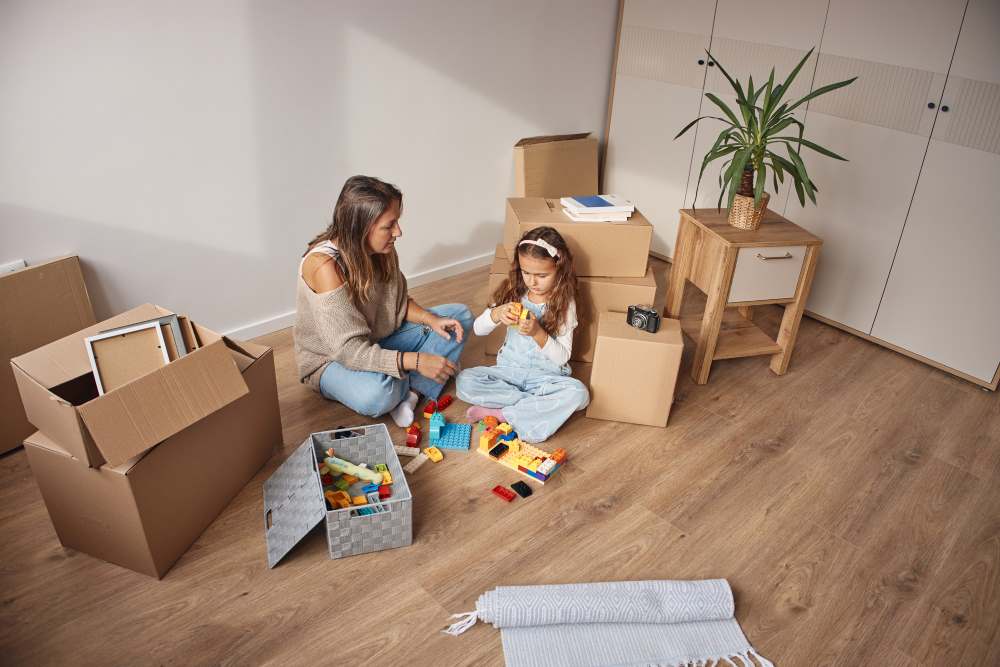
For many children on the autism spectrum, and for any child with sensory sensitivities, the hardest part of a move is not the new house. It is the process. A relocation asks a sensory-sensitive child to give up the two things that keep them regulated at the same moment: their familiar environment and their daily routine. Rooms empty out, strangers arrive, and the day fills with noise and unpredictability. The good news is that with planning, you can protect both of those anchors and carry your child through the disruption far more gently.
Prepare the change slowly and concretely
Predictability does most of the heavy lifting here. Start weeks ahead with concrete, visual tools rather than vague reassurance: a photo book of the new home, a simple countdown calendar, and a short social story that walks through each step of the day in order. Let your child ask the same questions as many times as they need to. Because these conversations land differently for a child who processes the world in their own way, it helps to lean on strategies for communicating with kids who have different needs rather than assuming a standard talk will land.
Keep the sensory world intact
Wherever you can, hold the sensory environment steady. Pack your child's room last and unpack it first, recreating it as closely as possible: same bedding, same layout, same nightlight in the same corner. Keep a regulation kit out of the truck and with you all day, noise-canceling headphones, a weighted blanket, preferred snacks, and whatever comfort items settle them fastest. Much of the ordinary groundwork that makes any family move smoother still applies, just dialed up and made more deliberate.
The loading hours are the sensory danger zone
The loudest, least predictable stretch of the entire move is the few hours when everything is carried out and loaded onto the truck. Furniture vanishes, doors stay open, and unfamiliar people move quickly through the house. For a sensory-sensitive child, that window can tip a merely hard day into a full meltdown, and it is also exactly when a parent is most likely to be pulled away to manage logistics. The day goes far better when that phase is short, controlled, and off your hands. If your family's move is to the Cincinnati area, having professional movers in the Cincinnati area run the packing and loading keeps that overwhelming stretch as brief as possible, and frees one parent to stay beside your child somewhere quiet, headphones on, doing nothing but co-regulating. A crew that works efficiently shrinks the precise part of the day your child finds hardest, which is worth far more than the hours it saves.
Rebuild the routine fast
Once you are in, resist the urge to unpack the whole house before anything else. For a sensory-sensitive child, routine restored quickly matters more than boxes emptied. Get their room fully set up first, then hold the familiar rhythm: the same wake time, the same meals, the same bedtime sequence from the night before the move. Expect some regression in the first weeks, more stimming, clinginess, or sleep disruption, and treat it as a normal response to upheaval rather than a setback. Keeping the wider emotional things to consider when moving with your kids in view helps the whole family reset together.
A move will never be effortless for a child who relies on sameness. But when you protect the environment, guard the routine, and keep the chaotic hours short and contained, you turn an overwhelming event into something your child can be carried through, one predictable step at a time.