



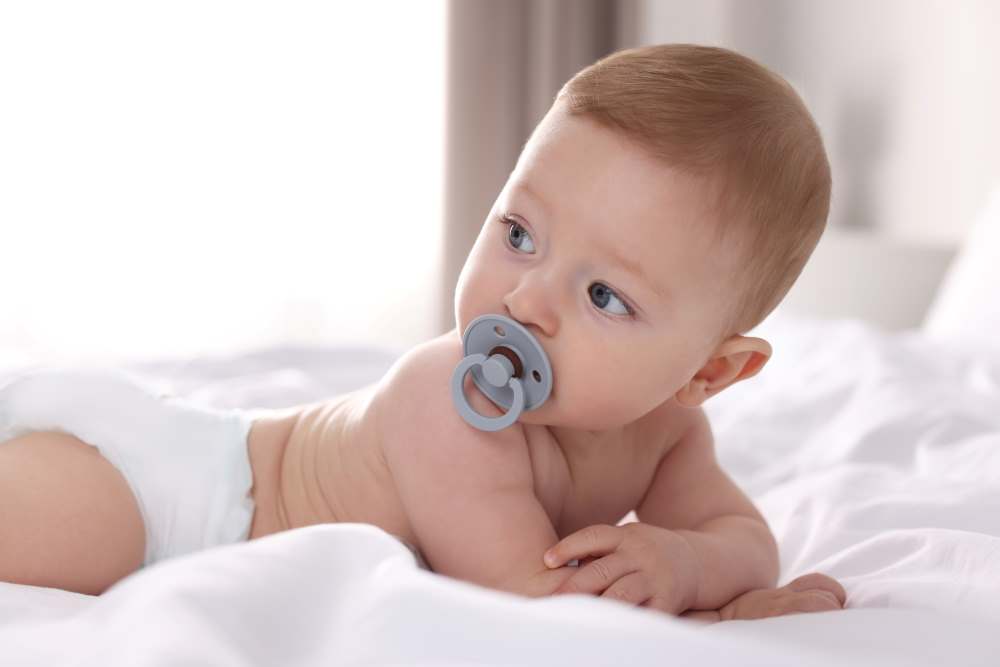
Parents often wonder about the relationship between pacifiers and breastfeeding newborns. Pacifiers, in general, can give a baby comfort, calm anxiety, and help the child to rest, but some parents still worry that if they give pacifiers too early, their kids will be very much disrupted in breastfeeding.
This article aims to present the advantages and disadvantages of pacifier use while breastfeeding to the mother. In addition to that, this article will be discussing safe measures for sterilizing pacifiers with the help of a bottle washer dryer sterilizer so that parents can keep both their baby’s comfort and health during this difficult time. Excited to what's next?
What Is the Concern Around Pacifiers and Breastfeeding?
One of the most prevalent concerns that parents come across when discussing pacifiers and breastfeeding newborns is the issue of nipple confusion. It refers to a situation where a baby has adapted the outlet and the texture of a pacifier, which sometimes result in the inability to latch correctly on the breast.
Incorrect latching can cause baby frustration and the appearance of sore nipples in the mother, who might also experience reduced milk output.
Besides that, another anxiety of parents is that the pacifier will make the baby skip or discontinue feeding periods. Breastfeeding is a combination of supply and demand, and the absence of feeding can indicate to the mother’s body that less milk should be produced.
Therefore, continuous nursing is very important for babies who are not yet mature enough to feed and as a result, the doctor usually prescribes them in order to provide built-up milk and healthy growth. This is the reason why many specialists advise to introduce a pacifier only after breastfeeding has been established.
Understanding Nipple Confusion: Myth or Real Issue?
One of the most frequent topics discussed when talking about pacifiers and breastfeeding newborns is nipple confusion. Nipple confusion is a term that defines the condition when infants after a bottle or pacifier use are introduced find it difficult to breastfeed. The way a baby sucks on a bottle or a pacifier is different from the one at the breast, thus some babies may get upset or latch inappropriately.
Nevertheless, the case is not true with every baby. There are a number of babies who can easily switch between breastfeeding and the use of a pacifier. Many health professionals, therefore, advise that a pacifier should be introduced only when breastfeeding feels normal and comfortable, thus a lesser probability of feeding issues is achieved.
When Is It Safe to Introduce a Pacifier to a Breastfed Baby?
Parents who are thinking about the use of pacifiers and breastfeeding newborns should know that timing is very important. The use of a pacifier too early may change the way the baby gets a good latch and milk supply. The main thing is to wait until the breastfeeding takes shape and then the risks will be reduced and the transition will be easy for both mom and baby.
Some points to consider while deciding are:
-
Keep away for 3–4 weeks – Let the time pass for breastfeeding to be successfully established.
-
Look for a good latch – Check if the baby is comfortably feeding at the breast.
-
Confirm that the milk supply is adequate – Make sure that the frequency of nursing is enough to maintain the production of milk.
-
Use for soothing only– The pacifier should be offered between the feeds and not as a replacement.
-
Care for the baby’s signs – Hunger signals should always be the first to be considered before giving the pacifier.
Benefits of Pacifiers for Newborns (Including Soothing and Sleep)
Though parents may worry about the use of pacifiers and breastfeeding newborns, it is a fact that pacifiers can bring a couple of advantages that are not to be neglected if they are used at the right time.
Many families rely on pacifiers to become an effective tool in calming infants and as a way of achieving a better rest. Some of the main advantages are:
-
The pacifier quiets the baby and his crying or fussing which is a cause of helplessness in the baby.
-
Giving a child comfort from self-soothing thus it becomes possible for babies to fall asleep faster.
-
The pacifier can take some of the child’s hard feelings caused by injections or other medical procedures.
-
There is a correlation between pacifier use and a decreased risk of sudden infant death syndrome.
-
The device allows the infant to suck when he is not hungry and thus the baby’s urge to suck is satisfied.
Potential Downsides: Impact on Latch and Feeding Cues
Even though pacifiers and breastfeeding newborns have some advantages, the use of pacifiers can lead to some problems if they are introduced too early or if they are used too often.
The main fear is that pacifiers can have an effect on breastfeeding which is particularly during the first few weeks when feeding routines are still being established. Below are some of the possible disadvantages of pacifiers to be considered:
-
Some infants after the frequent use of pacifiers might find it hard to attach properly.
-
Pacifiers can make hunger signs invisible leading to a low number of nursing sessions.
-
The body can understand that it needs to produce less milk as a result of less frequent breastfeeding.
-
The baby may become habituated to the pacifier and then prefer it to the breast.
-
Using for a long period can lead to the wrong positioning of the teeth in the future.
Tips for Using a Pacifier Without Disrupting Breastfeeding
Parents who would like to have all the good sides of both pacifiers and breastfeeding newborns, and also the bad sides should be very careful about timing and moderation.
Only after breastfeeding is properly established, the use of a pacifier should be introduced as a way of ensuring both the latch and milk supply are protected. In a simple way, a few cautious habits can allow pacifiers to be used without worrying about a nursing interruption. Here are some tips to consider:
-
Ensure breastfeeding is consistent before starting.
-
Use pacifiers for soothing, not as a replacement for nursing.
-
Always respond to feeding needs before offering a pacifier.
-
Keep it for sleep, comfort, or special situations.
-
Use tools like a bottle washer dryer sterilizer to maintain hygiene.
How to Choose the Right Pacifier for a Breastfed Baby
While deciding on pacifiers and breastfeeding newborns, the kind of pacifier is important the most. You cannot compare all pacifiers as those which are compatible with breastfeeding are developed with a feature to reduce the chance of nipple confusion.
Things to consider when choosing a pacifier:
-
Nipple shape- Select orthodontic or natural-shaped nipples that are closest to mother’s breast.
-
Soft material- Silicone is strong and can be cleaned easily, but latex is softer and gets worn faster.
-
Size of the shield- Choose one that is wide enough to stop the baby from swallowing but still comfortable for your baby’s face.
-
Ventilation holes- be sure that the shield has holes for the air and safety.
-
Age-appropriate size- Get the pacifier which is marked as suitable for your baby’s age.
-
Easy to clean- It should be sterilized, preferably with a bottle washer dryer sterilizer.
What the Experts Say: A Look at AAP and WHO Recommendations
When it comes to pacifiers and breastfeeding newborns, the American Academy of Pediatrics and the World Health Organization are on the same page giving caregiver-friendly and supportive instructions.
According to the American Academy of Pediatrics, the use of a pacifier should be introduced after the establishment of lactation, which is usually after 3 to 4 weeks, and from that time on, a pacifier can be used without any problems. Furthermore, they state that a pacifier used at sleep may be a preventive measure against sudden infant death syndrome (SIDS) to a certain extent.
The WHO advises to abstain from using pacifiers during the first few weeks in order not to interfere with breastfeeding. Exclusively breastfed babies should be fed on demand and in the right way since this is the practice that is encouraged.
Conclusion
Pacifiers should be used as a source of consolation, rest, and comfort, but their use needs to be balanced, which is more important in the case of pacifiers and breastfeeding newborns. Feeding on demand, observing when the baby is hungry, and keeping pacifiers clean are the three major ways of preventing any interference with feeding.
Mother's breastfeeding objectives as well as baby’s needs can be backed by pacifiers if used at the right time and with the required care. Moreover, parents can feel more comfortable and relaxed while going through this phase if they use bottle washer dryer sterilizer which make the hygiene maintenance more convenient.