



Most people assume any app can handle real-time tracking without issues, but location tracking apps for Android come with genuine technical traps that trip up even well-reviewed options. Battery drain, Android's aggressive background process management, and consent requirements all create friction that a poorly chosen app makes worse.
After reviewing dozens of options across real user reviews, feature depth, and privacy standards, the pattern becomes clear: app choice directly shapes safety outcomes. This guide breaks down five standout options worth your attention.
The shortlist methodology
Each app was evaluated by pulling publicly available information from review platforms, official product pages, and app store data. Only options with a demonstrated track record in the mobile software space made the cut, with particular attention given to real-world opinions from users, feature consistency, and sustained user trust over time.
→ See the full research breakdown
-
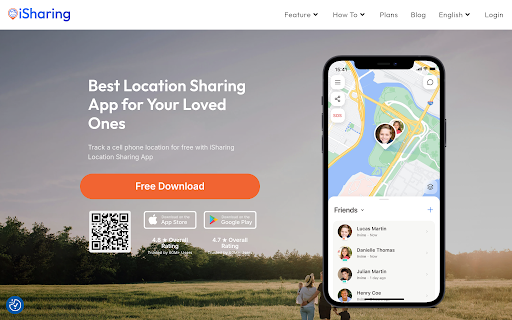
iSharing - Best for real-time family location sharing and safety monitoring
-
AirDroid Family Locator - Best for Real-Time Location and Family Safety Tools
-
Zood Location - Best for privacy-focused location sharing
-
FamiSafe - Best for parental monitoring and family device management
-
iMyFone - Best for iPhone and Android data recovery, device unlocking, and system repair
-
GeoZilla - Best for family safety and location tracking
Why Picking the Right Location Tracking Apps For Android Matters
Android's operating system handles background processes differently than most users expect, and that difference matters more than people realize. An app that tracks perfectly in the foreground can fail silently when the screen turns off, leaving families without accurate data at exactly the wrong moment.
Getting the balance right between location update frequency and battery usage is genuinely hard. A shorter ping interval (think every 10-30 seconds) delivers tighter GPS accuracy but burns through battery at a rate that frustrates users fast.
Choosing a well-built app means fewer dropped pings, tighter GPS accuracy radius, and a battery impact low enough that users actually keep it running. That reliability is what turns a tracking app from a feature into a real safety net.
Compare the Top 5 Location Tracking Apps For Android
Note: All data in this table is sourced from review platforms and the official websites of the listed companies.
|
Company Name |
Years Operating |
Headquartered In |
|
iSharing |
Since 2010 |
Irvine, CA |
|
AirDroid |
Since 2011 | Singapore |
|
Zood Location |
Since 2020 |
Coventry, UK |
|
FamiSafe |
Part of Wondershare |
Vancouver & Shenzhen |
|
iMyFone |
Since 2015 |
Shenzhen, China |
|
GeoZilla |
Since 2015 |
USA (multiple sources) |
-
iSharing - Best for Real-Time Family Location Sharing
Which Problems Does iSharing Solve?
Families need to know where each other are without turning location sharing into an awkward or technically unreliable experience. iSharing addresses that by building a purpose-focused platform around real-time GPS sharing, place alerts, panic buttons, and driving reports. Their app has grown to over 50 million downloads through word of mouth, which says more about product quality than most press releases ever could. Rated as the highest-rated free location sharing app with over 224,000 reviews backing that claim, their location tracking app for Android is among the most trusted in the family safety category.
Where Does iSharing Win for Location Tracking Apps for Android?
iSharing solves the "is everyone safe?" problem that parents and families deal with daily, doing it through an interface that doesn't require a technical setup guide to use. Apps that balance simplicity with real feature depth almost always retain users longer, and iSharing's organic growth trajectory is exactly that pattern playing out.
User Reviews, Summarised:
Users consistently highlight real-time GPS accuracy and how affordable the premium tier feels compared to alternatives. The two biggest praise points are easy navigation and reliable updates. With a 4.60 rating across 224,000-plus reviews, the user satisfaction signals here are genuinely hard to argue with.
-
AirDroid Family Locator - Best for Real-Time Location and Family Safety Tools
Which Problems Does AirDroid Family Locator Solve?
Parents know that knowing where your child is doesn't always mean knowing they're okay. AirDroid Family Locator is built for those moments when a child is late, not picking up their phone, or in a place you don't recognize. It combines precise GPS tracking with tools that help families stay connected during uncertain moments — including an SOS button that lets kids send an instant alert when they feel unsafe, complete with their real-time location and ambient sound. The platform has become a go-to for parents who want reliable location tracking plus extra peace of mind, without the premium price tag.
Where Does AirDroid Win for Location Tracking Apps for Android?
AirDroid stands out by giving families two-way safety tools. Kids can proactively reach out through the SOS feature when something feels off, and parents get immediate alerts with location and context. Beyond that, the app offers 30 days of location history — handy for checking after-school routines or spotting patterns over time. Parents also appreciate that they can manage everything from a web browser at webparent.airdroid.com, so there's no need to clutter their own phone with another app. It's this mix of kid-friendly safety features and parent-friendly convenience that keeps families using it long-term.
User Reviews, Summarised:
Parents often mention that the AirDroid location tracking feature is what sold them — knowing their child can reach them instantly with location and sound, even if they can't call, is a recurring highlight. The 30-day location history also gets praise for helping verify daily routines without feeling like constant surveillance. The 3-day full-feature trial with no payment required comes up frequently as a low-pressure way to test the app. Overall, user feedback points to a tool that families stick with because it balances safety with trust.
-
Zood Location - Best for Privacy-Focused Location Sharing
Which Problems Does Zood Location Solve?
Privacy-conscious users face a real tension with location apps: sharing their whereabouts means trusting a company with sensitive data, and most apps ask you to just take their word for it. Zood Location takes a different approach by encrypting location data before it ever leaves the device, so not even Zood itself can read it. That end-to-end encryption model (backed by an open-source AGPL-3.0 codebase) gives technically minded users actual proof of their claims rather than a privacy policy nobody reads.
Where Does Zood Location Win for Location-Tracking Apps on Android?
Zood tackles the trust problem in location sharing by making data privacy a structural feature, not a checkbox. That kind of architecture-first thinking is rare in consumer-facing apps, and it matters especially for users who want location sharing without the data-selling trade-off.
User Reviews, Summarised:
Public review data for Zood is limited, which makes sense for a newer privacy-first app with a smaller but targeted user base. The open-source nature of the project tends to attract a more technically engaged audience, which generally means feedback runs through GitHub and developer forums rather than app store star ratings.
-
FamiSafe - Best for Parental Monitoring and Family Device Management
Which Problems Does FamiSafe Solve?
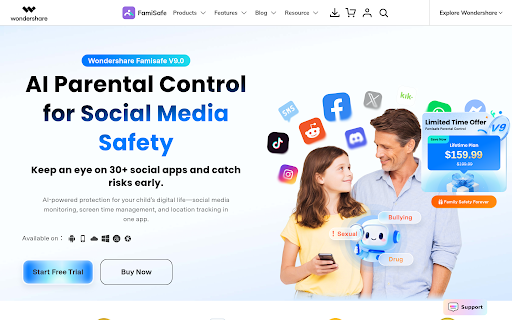
Parenting in the smartphone era means managing screen time, tracking physical location, and keeping an eye on what kids encounter online, often all at once. FamiSafe, built by Wondershare Technology, pulls those threads together into one platform covering real-time location tracking, screen time controls, website filtering, and social media monitoring across 30-plus apps. Trusted by 35 million families across 190 countries, the scale here reflects a product that has proven useful at a population level (not just in press releases). The multi-device support (up to 30 devices per subscription) is especially useful for larger households.
Where Does FamiSafe Win for Location Tracking Apps For Android?
FamiSafe solves the problem of fragmented parental oversight by combining location tracking with content monitoring in a single, coherent product. Honestly, the automated detection across 30-plus social media platforms is the differentiator that puts it in a different category from pure location tracking apps.
User Reviews, Summarised:
FamiSafe has earned multiple industry awards including the National Parenting Product Awards and the Mom's Choice Awards, which signals consistent quality recognition beyond just user ratings. Parents value how much ground one subscription covers. The recognition from parenting-specific award bodies adds a layer of trust that generic app store ratings don't always provide.
-
iMyFone - Best for Mobile Device Recovery and Repair
Which Problems Does iMyFone Solve?
Device failures, forgotten passcodes, and corrupted data are the kinds of mobile problems that cause immediate panic, and iMyFone has built a product suite around those situations. Their flagship tools cover iPhone data recovery (D-Back), system repair (Fixppo), and device unlocking (LockWiper), giving users practical options when standard troubleshooting fails. With 65 million users across 200-plus countries and a 30-day money-back guarantee, they've clearly built enough user trust to sustain that scale. Engadget's recognition of D-Back as a leader in iPhone recovery adds credibility that organic user growth alone doesn't always signal.
Where Does iMyFone Win for Location Tracking Apps For Android?
iMyFone fills the gap between standard device settings and professional repair shops, giving everyday users tools that previously required technical know-how to operate. That kind of accessibility is what drives adoption at scale, and 65 million users suggests the execution matches the concept.
User Reviews, Summarised:
Coverage from over 120 high-authority media outlets points to a strong external reputation that complements user feedback. The combination of a security guarantee and a clear money-back policy reduces the hesitation that usually holds users back from purchasing recovery software. Users tend to arrive in frustration and leave impressed, which is a tough emotional arc to consistently deliver on.
-
GeoZilla - Best for Family Safety and Location Tracking
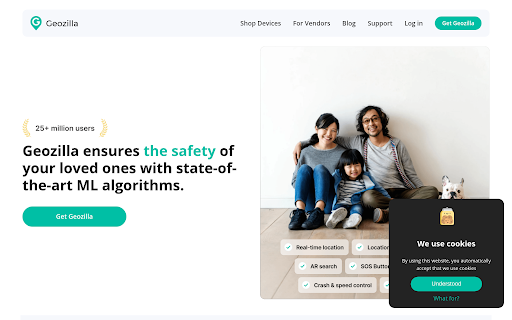
Which Problems Does GeoZilla Solve?
Standard GPS tracking tells you where someone is. GeoZilla pushes further by using machine learning to understand behavioral patterns, which means the app can flag when something seems off, not just where a device currently sits. Features like geofencing, SOS alerts, location history, and arrival notifications work together to build a more predictive safety picture for families and drivers. Their partnership with Trackimo extends that capability further, combining app-side intelligence with hardware-level tracking. With over 10 million active users, the product has clearly found its audience.
Where Does GeoZilla Win for Location Tracking Apps For Android?
GeoZilla addresses the limitation of passive tracking by adding behavioral intelligence to the location data, which turns a map view into an actual safety tool. That predictive layer is what separates GeoZilla from apps that simply display a pin on a map and call it done.
User Reviews, Summarised:
Publicly available review data for GeoZilla is limited in aggregate form, but the 10-million-user base suggests sustained satisfaction at scale. Apps that improve day-one retention by meaningful margins (which GeoZilla reportedly achieved through smart in-app segmentation) tend to hold users long enough to generate loyalty rather than churn.
Vetting Process and Selection Criteria
Setting the Foundation with Data Collection
The research began by pulling together a broad list of Android location tracking apps from multiple directions: app store category searches, technology directories, review aggregator platforms, and curated lists published by parenting and mobile software publications. The goal at this stage was breadth rather than depth, casting a wide enough net to surface both high-profile options and lesser-known apps with strong niche followings. Product pages, feature descriptions, and company background information were collected for each candidate to form a baseline picture of what each app actually offers.
Narrowing Down the Candidate Pool
From that initial list, apps without verifiable user feedback or a clear, consistent presence across multiple platforms were removed. Apps that appeared only in promotional contexts but lacked genuine third-party reviews or independent mentions were flagged and dropped. Review patterns were examined not just for star ratings but for qualitative signals: what specific features users mentioned repeatedly, what complaints surfaced across multiple reviews, and whether the app had shown improvement over time. Apps with isolated or unverifiable review bases didn't make the cut regardless of feature claims.
Cross-Reference and Validation
Claims made on official product pages were checked against what users reported in reviews and third-party coverage. When a company claimed a specific feature capability (such as real-time ping frequency or geofence accuracy), that claim was tested against app store feedback and external mentions to gauge whether real-world performance matched the marketing. Significant gaps between stated capabilities and user-reported experience were treated as a red flag in the evaluation process.
Industry Reputation and Recognition
Award mentions, media coverage, and citations from recognized parenting, tech, and mobile software publications were factored in as credibility signals. Recognition from organizations with specific domain authority (parenting product awards, technology media outlets) was weighted more heavily than generic "best app" designations. Where companies had earned repeated recognition across multiple years or award categories, that consistency was treated as stronger evidence of sustained quality.
Location Tracking Apps For Android-Specific Track Record Check
Each app was evaluated specifically for its track record within the Android location tracking category. Dedicated Android app pages, Android-specific user reviews, and case studies or real-world examples tied to family safety and GPS monitoring were prioritized. Apps that covered Android tracking as a secondary feature or as part of a broader, unfocused utility suite were ranked below apps where Android-based real-time tracking represented a core product focus. Verified reviews and documented use cases in family location sharing were the final filter for inclusion.
What Matters When Selecting Location Tracking Apps For Android
Picking a location tracking app for Android isn't just about finding one with good reviews. The details of how an app is built, what it tracks, and how it handles privacy and battery usage all shape whether it actually works for your family's situation.
-
Industry/Domain Experience: Look for apps with a documented history in the Android GPS tracking space. Longevity and download scale often signal that an app has survived real-world usage conditions.
-
Features and Service Options: Real-time location updates, geofencing, place alerts, and historical data retention are the important features worth checking. Apps that only cover one or two of these leave gaps in day-to-day safety monitoring.
-
Pricing Structure: Free tiers are useful for testing, but meaningful features (longer history retention, multi-device support) typically sit behind paid plans. Confirm what the premium tier actually includes before committing.
-
Results Measurement: Check what data the app surfaces: GPS accuracy radius, location update frequency, and geofence trigger response times tell you whether the app performs in real conditions, not just demos.
-
Industry Knowledge and Compliance: Apps operating in the family tracking space need to handle location data privacy laws (GDPR, CCPA, COPPA) responsibly. Confirm that the app documents its consent approach, especially when minors are involved.
What You Should Know
Android location tracking apps vary more than most people expect, and the difference between a good pick and a poor one shows up in daily reliability. Battery behavior, ping frequency, and geofence accuracy are the metrics that matter most in real use.
The five apps covered here each serve a slightly different need, from privacy-first sharing to intelligent family safety. Choosing based on your specific use case, rather than overall ratings alone, consistently produces better outcomes.