



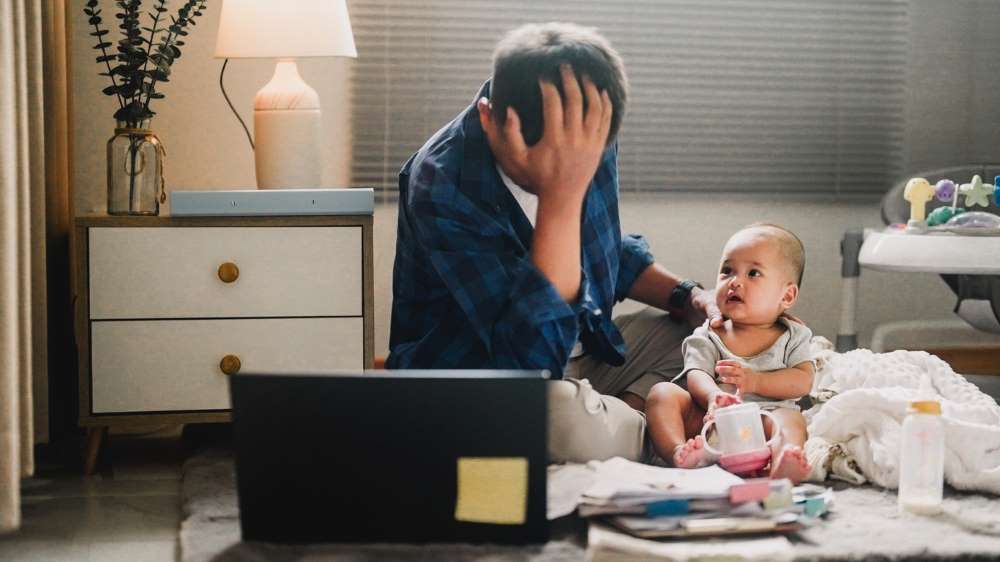
Being a parent comes with worry. From wondering whether your baby is sleeping enough to worrying about school, friendships, health, screen time, and eventually whether your teenager is ever going to text you back, there is always something that can occupy your thoughts.
A certain amount of concern is a perfectly normal part of caring for a child. Parenting anxiety, however, can become more persistent. Instead of appearing when there is a genuine problem and then subsiding, worries may begin to dominate everyday decisions and make it difficult to relax. Understanding what parenting anxiety looks like can make it easier to recognize when ordinary concern has started becoming something more disruptive.
What Is Parenting Anxiety?
Parenting anxiety generally describes excessive worry, fear, or stress connected to being a parent or caregiver. It can revolve around almost anything involving your child, including their health, safety, development, education, behavior, friendships, or future.
For some parents, anxiety can also center on their own abilities. You might repeatedly wonder whether you're making the right decisions or compare yourself with other parents and worry that you're somehow falling short. While occasional worries are expected, persistent anxiety can affect a parent's quality of life and potentially influence family life too.
When Normal Worry Becomes Difficult to Manage
There isn't always an obvious point where everyday parental concern turns into anxiety. Instead, you might notice that worrying has gradually started taking up more of your day. Perhaps you constantly imagine worst-case scenarios, repeatedly seek reassurance, struggle to switch off at night, or avoid certain situations because you're worried something could happen to your child.
If anxiety is becoming persistent or interfering with everyday life, seeking professional support can be a sensible next step. Options such as anxiety treatment at thetherapyspace.com can provide a place to explore anxious thoughts and develop healthier ways of responding to them. Getting support doesn't mean that you're failing as a parent. Mental health deserves attention just as physical health does.
Parenting Anxiety Can Be Exhausting
Constantly being on alert takes energy. When your brain is repeatedly running through potential dangers or questioning decisions, you may find it difficult to concentrate on other things. You could become irritable or angry, restless, tired, or struggle to enjoy time that would otherwise be relaxing. Sleep can also become difficult when nighttime provides the perfect opportunity for every worry you've had during the day to make another appearance.
Over time, anxiety can make parenting feel less like something you're experiencing and more like something you're continually trying to get right.
It Can Affect the Decisions You Make
Anxiety can sometimes encourage parents to become highly protective. You may feel uncomfortable allowing your child to take age-appropriate risks, solve problems independently, attend activities without you, or try something where failure is possible.
The intention is understandable: you want to keep your child safe. However, children also need opportunities to develop confidence and independence. Research into parenting and childhood anxiety has found associations between certain controlling parenting behaviors and childhood anxiety, although the relationship is complex and parenting is only one of many factors that may influence a child's emotional wellbeing.
The goal isn't to eliminate every possible risk. It's to distinguish between reasonable safety precautions and decisions driven primarily by fear.
Children Can Notice How Adults Respond to Worry
Children learn a great deal by watching the adults around them. If a parent frequently responds to unfamiliar situations as though they are dangerous, a child may begin interpreting those situations similarly. That doesn't mean an anxious parent will automatically have an anxious child, but there's an increased chance. Children's mental health is influenced by numerous biological, environmental, social, and individual factors.
Still, modelling healthy responses to uncertainty can be valuable. A child seeing a parent acknowledge a worry, think it through, and continue calmly can learn that uncomfortable feelings don't always have to control what happens next.