



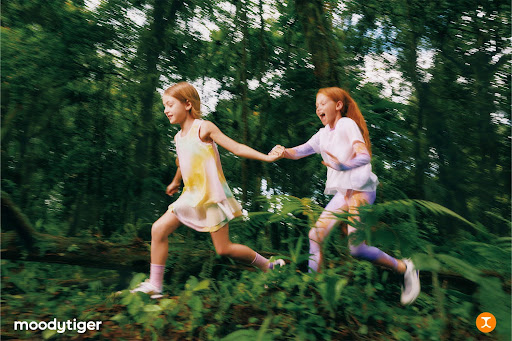
The family race day is a different kind of event from the one that appears on the registration page. The registration page shows a finish line, a timing chip, a distance. The actual day shows a car park at seven in the morning, a child who was enthusiastic about this six weeks ago and is now asking why anyone thought waking up before the sun was a good idea, a kit check that reveals one missing item, and a warm-up area where everyone is colder than they expected to be. By the time the starting gun goes, the day has already been going for two hours and the race itself is the part the child will remember. Everything before it is logistics.
What a child wears on race day shapes more of that experience than many parents account for at the registration stage. The outfit chosen at eight in the morning has to cover the pre-race cold, the exertion of the race itself, the warmth that builds in the final kilometres, and the standing-around-after that follows every finish line. Those are four different thermal states in the space of a few hours. A useful race-day layer is chosen for that full arc of the morning, not only for how it looks at the start line.
The Cold Start That Most Race Outfits Are Not Ready For
The hour before a race starts is the coldest part of the day and the part that most race outfits are least equipped for. The child who is dressed for the race itself, light, breathable, close-fitting, is the child who is visibly cold during the warm-up, who is distracted by the temperature during the team brief, and who crosses the start line already spending energy on being uncomfortable rather than on the race ahead. The child who has a layer for this specific window, the wait, the warm-up, the final minutes before the gun, crosses the start line with their attention in the right place.
The pre-race layer has a different job from the race layer. It should feel lighter than a hoodie, warmer than wearing nothing over the race top, and packable enough to hand to a parent at the start line without slowing anyone down. Many families focus on what the child will wear during the race and treat the hour before it as an afterthought. Experienced race-day families usually plan for the wait as deliberately as they plan for the run.
What the Race Itself Asks From a Child's Clothing
A running race asks specific things from a child's upper-body clothing that a general activewear piece may not always meet. The arm swing of a running stride. The core engagement that builds over the second half of the distance. The heat that accumulates from the inside out as the effort increases and the child pushes toward the finish. The piece that handles this well can stay light, help manage heat, and move with a child's arms during sustained forward movement.
The moodytiger Fairy Long Sleeve Tee meets the race-day brief in specific, verifiable ways. The Brizi® cooling fabric can help the tee feel lighter during warm, active stretches of the morning. Moisture-wicking construction helps move sweat away during exertion, and UPF 50+ fabric can add useful coverage as part of a broader sun protection routine. The design also gives the tee a lighter, more expressive look, which can matter to a child who wants to feel comfortable in what she is wearing on race day.
The Finish Line Continues the Clothing Test
The finish line moment is the one that appears in the photographs. What happens after it is less photographed and equally important. The child who crossed the finish line at full effort is now standing still in clothing chosen for motion, while body temperature begins to drop and the post-race medal ceremony or family walk back to the car may still be ahead. A race outfit that worked well for the run may need a layer or fabric choice that also feels comfortable during the next part of the morning.
Activewear built for active kids can make the post-race window easier when it considers cool-down comfort as well as movement. Fabric that helps move moisture during exertion can feel more manageable when the child stops moving. A fit that moved freely during the run should also feel comfortable during the standing-around that follows. A long sleeve that provided coverage during the race can help during the cool-down without requiring a full change of clothes before the medal is collected. These are the details that make a race day feel complete rather than triumphant for forty seconds and then cold and uncomfortable for the rest of the morning.
Preparing the Race Day Bag

The bag that comes to a family race day is smaller than the bag that comes to a weekend trip and asks more of every item in it. There is no room for the contingency outfit or the backup layer that exists purely in case of emergency. Every item needs to justify its space by covering more than one scenario, the pre-race cold, the post-race warmth, the celebration that moves from the finish area to wherever the family goes for breakfast.
moodytiger builds its activewear range for school-age children and teens around this kind of multi-scenario brief. The pieces that feel comfortable during the race can also transition into the post-race hour without requiring a change. The layer that handled the pre-start cold packs into the race bag and comes back out at the finish. The tee that worked for the run can work for the photographs and the walk back to the car. Packing a race day bag well is less about bringing more and more about choosing pieces that cover the full day rather than only the part that appears on the registration page.
What Children Remember About Race Day
The result is part of what a child carries home from a race day. The time, the placement, the medal that goes on the wall. But the feeling of the day is what shapes whether they want to do it again, and the feeling of the day is made up of small things. Whether the warm-up was too cold. Whether the tee felt right at the start line. Whether crossing the finish line felt like the best moment of a good morning or like relief after an uncomfortable one.
The clothing that contributed to the good version of that feeling did its work quietly. It helped the child stay comfortable when the effort built. It moved naturally through the run. It required little management between the start and the finish. When a child crosses the finish line thinking mainly about the race, the clothing has supported the day in the right way. That is what the right kit can do on race day, and it starts with choosing it as deliberately as everything else on the preparation list.