



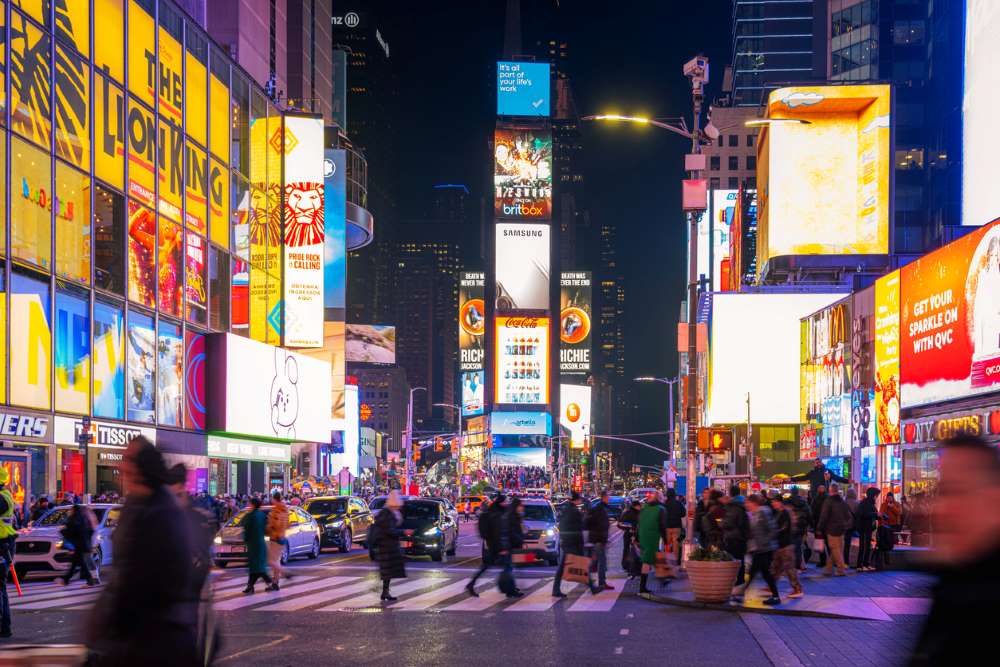
Painted white stripes on the asphalt feel reassuring. When children walk to school, many parents steer them toward the nearest marked crosswalk and assume they have chosen the safest option. The reality is more complicated: a striking share of pedestrian deaths happens at or near marked crossings, and children are the group least equipped to judge how fast a car is approaching or whether a driver is truly paying attention. The encouraging news: crossing a street is a skill, and like any skill it can be taught in stages — from hand-held, narrated crossings for preschoolers to a hard line on phones and headphones for teens.
Why a Marked Crosswalk Is Not a Guarantee of Safety
A crosswalk tells drivers where to expect people on foot, but it does not physically protect anyone standing in it. Between 2019 and 2024, 1,036 pedestrians were killed in California crosswalks across 1,025 separate fatal crashes, according to a 2026 analysis of California crosswalk pedestrian deaths drawing on the federal Fatality Analysis Reporting System (FARS). That is more than one in seven of the 6,656 pedestrians killed on California roads during those six years.
The concentration is striking. Los Angeles County alone recorded 356 crosswalk pedestrian deaths over the study period, roughly four times as many as second-ranked Orange County. Two Los Angeles intersections tie as the state's deadliest: S La Cienega Boulevard at Obama Boulevard in Baldwin Hills and S Central Avenue at E 89th Street, each with three pedestrian fatalities. The pattern reaches beyond the big city: Hesperia, Costa Mesa, and Compton each recorded two fatal crosswalk crashes in 2024.
One caveat matters: these rankings show where fatal crashes occurred in the past, not a complete safety score for the crossings your child uses today. The takeaway is not to memorize dangerous intersections but to stop treating the paint itself as protection.
Why Crosswalks Fail Children Specifically
Children are not small adults in traffic. Research behind child pedestrian safety education, including the NHTSA's pedestrian safety program, shows that kids under about ten cannot reliably judge the speed and distance of an approaching vehicle. A gap that looks comfortable to you may look no different to your child than one that is genuinely dangerous.
There is also a psychological trap: young children tend to assume that if they can see the driver, the driver has seen them. Eye contact, vehicle position, and turn signals mean little to a seven-year-old who has already decided the coast is clear. And because children are short, one parked car at the curb can hide them from a driver until they step into the lane.
The answer is not to keep children off streets but to give them structured, repeated practice rather than a one-time lecture.
Teach the Skill in Stages
Crossing safely is learned behavior, and the teaching works best when each stage matches what a child can actually process.
Ages 3–5
At this age the rule is simple: always hand-held, every street, every time, with no exceptions for quiet blocks or quick dashes to the car. What you can teach now is the script. Narrate every crossing out loud so the sequence becomes automatic: "Stop at the curb. Look left, look right, look left again." You are installing the soundtrack they will hear in their head years later, when you are not there.
Ages 6–9
Practice now shifts to real crossings, with you one step behind and your child leading the decision. Teach the most important rule of this stage: wait for the driver to look at you. A stopped car alone is not proof of safety, and eye contact is not a guarantee. Wait until the vehicle has fully stopped, keep checking for turning or approaching traffic, and cross only when the path is clear. Just as crucial: the walk signal is permission to look, not permission to go — a light can be on while a turning driver accelerates through the crosswalk. Have your child say out loud what they see — "that car is turning, so I'm waiting" — until the checking habit sticks.
Ages 10–12
Older kids can begin supervised solo crossings on a fixed route you have chosen together: you watch from a distance, they make the calls. Two rules anchor this stage. First, phones go into pockets before stepping off the curb, because one glance at a screen at the wrong moment can undo years of training. If this stage coincides with your child's first phone, configure its safety settings before the first solo walk. Second, teach mid-block versus intersection judgment. Drivers expect pedestrians at corners and marked crossings; stepping out mid-block, especially between parked cars, removes every layer of protection the road design offers. Independence should expand street by street as your child demonstrates good judgment.
Teens
Teenagers have the physical skills; the enemy now is distraction. This is the moment for a frank conversation about headphones, texting, and walking in a group. The point worth repeating: being right does not keep you safe. A teen can have the walk signal and the right of way, and none of it helps if a driver runs the light. Ask them to treat every crossing the way they would treat a driving test — full attention, every time — because the cost of one lapse can be permanent.
Choosing Safer Routes
Training works best on the right terrain. When you map your child's walk to school, prefer a signalized crossing with a crossing guard or a leading pedestrian interval — the signal timing that gives people on foot a few seconds' head start before turning traffic gets a green light — even if that route runs a few minutes longer than one with an unmarked crossing. The Safe Routes to School National Partnership favors that trade: a slightly longer, better-controlled route beats a shorter, chaotic one.
Be especially wary of multi-lane arterials. When a driver in the near lane stops for a child, that stopped vehicle can hide the child from drivers in the next lane, a crash pattern so common it has its own name: the multiple-threat collision. If your child's route includes a wide, fast road, look for a signalized crossing, a refuge island, or a guard-monitored corner instead.
Finally, walk the route once at the actual time of day your child will use it. A crossing that feels calm at noon can be a different world at 7:45 in the morning, with commuters, school drop-off traffic, and low sun in drivers' eyes.
What Parents Can Do Beyond Their Own Kids
Safer streets are also a community project, and parents have more leverage than they realize. Start by asking your school district or city for crash data on the crossings near your child's school. A documented pattern is hard for officials to ignore.
If parked cars crowd the corners near the school, ask the city about daylighting, which means removing the parking spaces closest to intersections so drivers and children can see each other. California's AB 413 addresses parking near corners and crosswalk approaches; parents can ask the city how the rule is being implemented locally.
You can also request leading pedestrian intervals at signals near schools and crossing guards at the busiest arrival and dismissal corners. None of these asks requires an engineering degree, just a specific corner, a specific request, and a few other parents saying the same thing.
A marked crosswalk is a place to practice, not a force field. The families who navigate it best combine two things: children who have learned the skill in stages, and adults who keep pushing for streets that forgive mistakes. This week, pick the crossing your child uses most, walk it together, and watch it through their eyes. Then teach the script — stop, look, wait for the driver to look at you — until it becomes the thing they do without thinking.