


Every parent accumulates a drawer full of outgrown gifts. The light-up toy that entertained for 11 minutes. The stuffed bear now buried under 30 others. Books survive the purge. A child's name printed on page one, their face illustrated into the story, their dog trotting alongside them through a fantasy world: that book stays on the shelf for years and gets re-read until the spine cracks.
This guide maps personalized children's books to the milestones where they deliver the most developmental value, from birth through early reading independence. Each section explains what makes a book effective at that stage, what kind of story to look for, and where to find it.
Why Personalized Books Work: What the Research Says
The cognitive mechanism behind personalized books is the self-reference effect, one of the most replicated findings in memory research. When children process information in relation to themselves, they recall it more accurately and retain it longer. Research published in Child Development by Cunningham (2014) documented this advantage in children as young as four years old. A 2025 study in Nature Communications suggests the roots of the effect may appear as early as age two, right when children develop mirror self-recognition.
The practical gains are measurable. Kucirkova, Messer, and Sheehy (2014) found in a peer-reviewed study in the Journal of Child Language that reading personalized books with preschool-age children produced stronger word acquisition than reading standard books. An earlier observational study by Kucirkova, Messer, and Whitelock (2013) found that personalized books prompted more smiling, more laughter, more vocal activity, and more reciprocal dialogue than non-personalized books. That finding held even when the comparison was the child's own favorite book.
One distinction matters: research differentiates between "nominal" personalization (name only) and "substantive" personalization (name, appearance, personal details). Name-only books produce no measurable benefit over generic books. The child needs to genuinely recognize themselves in the story for the self-reference effect to activate.
The American Academy of Pediatrics (AAP) recommends shared reading from birth, citing its role in building language, cognitive, and social-emotional development. Their 2024 updated policy statement calls shared reading "an essential component of primary care pediatric practice." An fMRI study from Cincinnati Children's Hospital found that preschoolers who were read to regularly showed greater activation in brain regions supporting language, imagination, and attention. (Hutton et al., Pediatrics, 2015.)
For a longer exploration of the neuroscience behind reading aloud, the Read Aloud Revival podcast by Sarah Mackenzie covers the research accessibly (available on Apple Podcasts and YouTube).
New Baby Arrival (Ages 0-12 Months)
Babies process language before they produce it. In the first year, over one million new neural connections form every second, and auditory input during shared reading directly shapes language network development (Center on the Developing Child, Harvard University). The AAP recommends reading aloud beginning at birth, including in the NICU.
At this stage, the book serves parents more than the baby. A personalized baby book with the child's name, birth details, and family members becomes a keepsake that parents read aloud during bonding time. The repetition of hearing their own name in a narrative context supports early name recognition, which typically develops between 4 and 9 months.
What to look for: board books with thick pages, high-contrast or colorful illustrations, simple rhythmic text, and the child's name woven naturally into the story. Books that include family members (parents, siblings, pets) give parents natural prompts for dialogic reading, the interactive style where the parent talks about the pictures rather than simply reading the words.
AI-powered personalized book services like Leo Books generate illustrated storybooks from a child's photo, producing a character that resembles the actual child rather than just inserting a name. This level of visual personalization is the substantive kind that research links to stronger engagement. You upload a photo, select a story and illustration style, and receive a preview in minutes, which you can then order as a hardcover or softcover.
First Birthday (Ages 1-2)
By age one, most children understand about 50 words and are beginning to point at pictures in books. A personalized birthday book at this stage reinforces the concept that books contain things relevant to their life. Toddlers at this age develop "book behaviors" like holding books right-side up, turning pages, and babbling along with text. Each of these behaviors predicts later reading success (Whitehurst & Lonigan, 1998).
What to look for: short stories (under 200 words), large illustrations, named objects the child recognizes from daily life, and a simple birthday or celebration narrative. Personalized birthday books for kids work best when the story connects to the child's actual world: their home, their pet, their favorite toy.
Reach Out and Read, a national pediatric literacy organization operating in nearly 5,000 medical centers, reports that parents who receive books at well-child visits are 2.5 times more likely to read with their children. If you give a first birthday book that a parent enjoys reading aloud, you have essentially installed a daily reading habit.
Starting Preschool or Daycare (Ages 2-4)
Separation anxiety peaks between 18 months and 3 years. Bibliotherapy, the use of books to help children process difficult emotions, has documented effectiveness for childhood anxiety. Montgomery and Maunders (2015) conducted a systematic review in Children and Youth Services Review confirming that creative bibliotherapy helps children with internalizing behaviors by validating feelings, normalizing anxious responses, and modeling coping strategies.
A personalized book about a child's first day at school or daycare, featuring their name and likeness, activates the self-reference effect in a therapeutic context. The child sees a character who looks like them feeling nervous, then succeeding. This models a coping narrative with the child as protagonist rather than observer.
What to look for: stories that name the specific anxiety (missing a parent, not knowing anyone) and then resolve it without dismissing the feeling. The child character should feel scared and then adapt, rather than simply being brave from the start. Books that include the child's actual teacher's name or school name add an additional layer of relevant personalization.
Welcoming a New Sibling (Ages 2-6)
Cornell Cooperative Extension research notes that children between 18 months and three years have the hardest time adjusting to new siblings. Children under 18 months may not recognize the disruption; children over four have more mature social and cognitive tools. The middle group feels the change acutely but lacks the language to process it.
Books about new siblings serve two functions. First, they give the older child language for complicated feelings (jealousy, confusion, pride, protectiveness). Second, they reframe the child's identity: you are still important, and now you also have a new role. Personalized new sibling books cast the child as the competent, needed big brother or big sister, reinforcing agency during a period when they feel a loss of control.
What to look for: stories that acknowledge mixed emotions honestly rather than presenting the new baby as purely wonderful. The best sibling books show the older child doing something the baby cannot, which reinforces their developmental identity. A personalized version, where the protagonist is visually recognizable as the actual child, strengthens identification with the coping model.
Leo Books offers new sibling stories where the older child appears as the main character alongside a baby character, with the option to include family pets and other family members. The generated illustrations depict the child's actual appearance, so identification is immediate rather than abstract.
Birthdays (Ages 3-8)
This is the peak window for personalized birthday books for kids as gifts. Between ages three and eight, children develop narrative comprehension and theory of mind (understanding that characters have thoughts and feelings separate from their own). A child who opens a birthday present and finds a book where they star in a story experiences a totally different reaction than receiving a generic book. The self-referential processing activates engagement, and the birthday context gives the book an emotional timestamp.
Research supports the developmental timing. Cluster-randomized control trials published in Intelligence (2024) by Batini et al. found that reading aloud to elementary-age children produced measurable improvements on two measures of intelligence compared to standard instructional activities. The effect was not limited to language; it extended to nonverbal reasoning.
What to look for: stories with a narrative arc (problem, journey, resolution) rather than simple "Happy Birthday, [Name]" formula books. The best birthday books give the child a quest or adventure, positioning them as capable and resourceful. The story should match the child's current interests. A child obsessed with space should find themselves in a space adventure, not a generic fairy tale.
Leo Books offers a custom story option alongside predefined themes, with eight illustration styles. This flexibility means you can match the book to the child's interests rather than choosing from a fixed catalog of templates.
First Day of School (Ages 4-6)
Starting kindergarten or first grade is the largest social transition most children have experienced. The child moves from a world organized around their family to a world organized around a classroom of peers. A personalized first day of school book, read in the days before school starts, functions as a cognitive rehearsal.
Cognitive rehearsal through narrative is a documented anxiety reduction technique. The child mentally practices the experience (entering the classroom, meeting the teacher, making friends) from a position of safety. Bibliotherapy research confirms that children who read about characters managing school-related anxiety report lower anxiety levels themselves (Montgomery & Maunders, 2015).
What to look for: stories set in realistic school environments (not fantasy schools) where the child character navigates common first-day scenarios: finding their cubby, eating lunch alone initially, making a first friend. The personalization should include the child's name and appearance so the cognitive rehearsal feels directly applicable.
Holidays (Ages 2-10)
Personalized Christmas books for children and personalized holiday books serve a different function than milestone books. They become annual traditions. A family that gives a personalized holiday book each year accumulates a growing library that documents the child's development. The three-year-old's Christmas book and the seven-year-old's Christmas book sit on the same shelf as a visible record of growth.
The commercial search volume for "personalized Christmas books for children" spikes predictably in October through December each year, and for good reason: books solve the grandparent gift problem. Grandparents want something meaningful. Toys get outgrown. Clothes get stained. A book with the child's face in a holiday story becomes a lasting keepsake with minimal effort for the gift-giver.
What to look for: holiday stories that focus on universal themes (generosity, family, wonder) rather than tightly denominational narratives, unless that specificity matches the family. Personalized holiday books should include siblings and pets where possible, since holiday stories are inherently about the family unit.
For families wanting a fast turnaround during holiday season, AI-generated personalized books offer a practical advantage. Leo Books generates a preview within minutes of uploading a photo, and orders can include a dedication message for gift-giving. The digital preview means the gift-giver can verify the result before committing to print.
Learning to Read (Ages 5-7)
The transition from being read to and reading independently is the most consequential literacy milestone. Children who struggle with motivation during this phase often develop negative associations with reading that persist into adulthood. A personalized book at this stage gives the emerging reader intrinsic motivation to decode text, because the text is about them.
Research from the National Literacy Trust found that personalized reading experiences can help children see themselves as readers from an early age. Children who identify as readers by age six are significantly more likely to read for pleasure at age fourteen. The gap between "reader identity" and "non-reader identity" translates to roughly three years of reading age difference by age fourteen.
What to look for: books with controlled vocabulary and predictable sentence structures, ideally at the child's instructional reading level. The personalization should include the child's name in high-frequency positions (sentence beginnings, repeated refrains) so the child encounters a familiar word regularly while decoding unfamiliar ones. Illustrations should support the text, providing visual context clues for new vocabulary.
How to Choose Between Personalized Book Providers

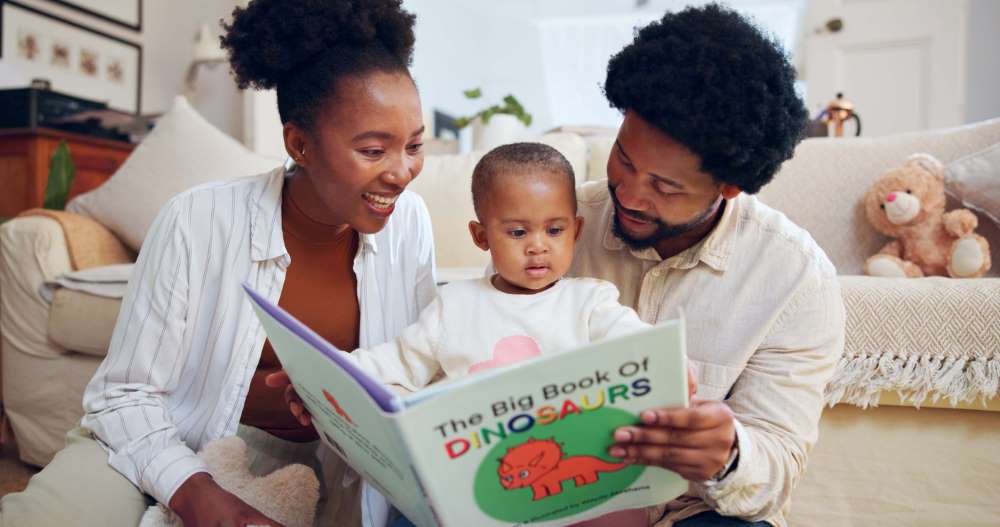
https://www.pexels.com/photo/a-mother-and-her-kids-reading-a-book-7105614/
The personalized children's book market ranges from print-on-demand template books (where a name is inserted into pre-written text) to fully AI-generated custom stories. The key differentiators:
• Level of personalization. Name-only books are the baseline. Research-supported personalization includes the child's appearance, family members, pets, and contextual details. AI-generated books from providers like Leo Books create illustrations from the child's actual photo, producing substantive personalization.
• Story quality. Template-based books often sacrifice narrative coherence for personalization mechanics. The child's name appears awkwardly, or the story exists only to deliver the personalization gimmick. The best personalized books read like real stories that happen to feature a real child.
• Production quality. Board books for babies need to survive chewing and throwing. Hardcovers for older children need bindings that endure hundreds of re-reads. Check whether the provider offers both softcover and hardcover options, and whether the print quality (paper weight, color reproduction) is gift-worthy.
• Turnaround time. For milestone gifts, parents often realize the need days before the event. AI-generated books with digital preview and fast shipping solve the last-minute problem that traditional custom book publishers cannot.
Established providers like Wonderbly offer a wide catalog of template-based personalized books with strong production quality. I See Me specializes in name-focused personalized books with traditional illustration. Leo Books uses AI to generate fully custom illustrations from uploaded photos, with the ability to include pets, siblings, and custom story elements, representing the newer end of the market where the technology enables deeper personalization at a lower price point.
Tips for Maximizing the Impact of Personalized Books
Read the book with the child, not just to them. Dialogic reading, where the parent asks questions, points to pictures, and connects the story to the child's life, produces significantly greater language gains than passive read-aloud. Cincinnati Children's Hospital research found that this interactive approach activates optimal brain network engagement across language, imagination, and attention regions.
Re-read repeatedly. Children request the same book again and again because repetition consolidates learning. A personalized book that a child asks for every night is doing more developmental work than a shelf of unread alternatives.
Connect the story to real life. After reading a personalized first-day-of-school book, reference the story during the actual first day: "Remember when you found your cubby in the story?" This bridges the fictional rehearsal to lived experience, a core mechanism in bibliotherapy.
Allow older children participate in creating the book. AI-powered tools that let children choose the story, pick the art style, or describe the adventure they want add a layer of creative agency. The child becomes co-author, further deepening engagement through ownership.
FAQ
Are personalized books better than regular children's books?
Personalized books with substantive customization (the child's appearance, not just their name) produce measurably higher engagement than non-personalized books, including the child's own favorite book, according to observational research by Kucirkova, Messer, and Whitelock (2013). They complement rather than replace a diverse reading library.
What age is best for a child's first personalized book?
The American Academy of Pediatrics recommends shared reading from birth. A personalized baby book given at birth or as a baby shower gift serves as a bonding tool for parents and introduces the child to their name in a narrative context during the first year.
Do personalized books help children learn to read?
Research from the National Literacy Trust indicates that personalized reading experiences help children develop a "reader identity" earlier, which correlates with stronger reading outcomes through age fourteen. The self-reference effect also improves word acquisition during shared reading (Kucirkova, Messer, & Sheehy, 2014).
What is the best personalized book for a birthday gift?
The most effective personalized birthday books for kids feature a narrative adventure with the child as protagonist rather than a simple "Happy Birthday" formula. Look for books that match the child's interests and include their actual appearance, not just their name.
Are AI-generated personalized children's books high quality?
AI-generated personalized books vary by provider. Leading established services like Leo Books produce illustrations from uploaded photos with multiple art style options. The key quality indicators are print material (paper weight, binding durability), illustration consistency, and story coherence. Request a digital preview before ordering.
What should I look for in a personalized Christmas book for children?
Personalized Christmas books for children work best when they focus on universal holiday themes like generosity and family rather than narrow narratives. Include siblings and pets in the customization. Hardcover editions hold up better as annual keepsake traditions.
Can personalized books help with new sibling adjustment?
Books that cast the older child as a capable big sibling reinforce agency during a period of disrupted routine. Cornell Cooperative Extension research recommends reading books about new babies as a preparation strategy. Personalized versions, where the child recognizes themselves as the protagonist, strengthen identification with the coping model.
How do personalized books compare to traditional children's books for child development?
Both serve essential roles. Traditional books expose children to diverse characters, settings, and perspectives. Personalized books leverage the self-reference effect to boost engagement, vocabulary acquisition, and reader identity. A 2025 study in the European Journal of Psychology of Education found that children from underrepresented groups benefited disproportionately from personalized books, as they saw themselves reflected in a published book for the first time.