



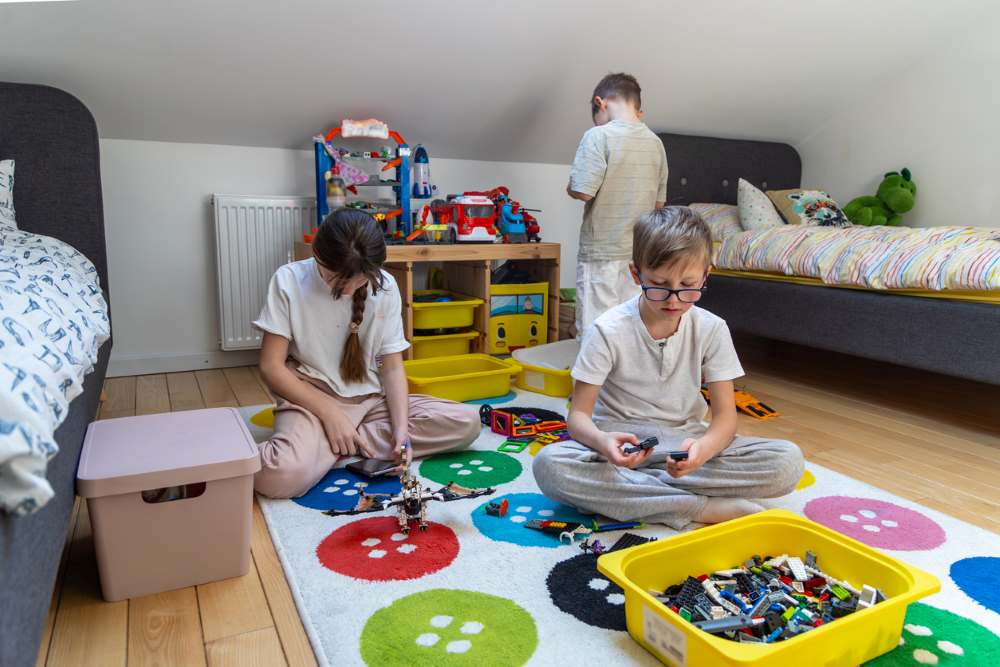
Your kids stuff is driving you absolutely crazy, isn't it?
You know the story. One minute you're all smiles, dishes done, and your home is pretty presentable. The next thing you know, there are building blocks under the couch and random art supplies all over the kitchen table. All this and that's not even counting those pesky Lego pieces everywhere.
The problem is…
Most of us believe MORE space is the solution to our storage woes. 29% of households are reporting issues with disorganization and clutter negatively affecting family life. The truth is though…it's not about having more space…
It's about having a functional system that actually works.
The Right Storage System can transform your life.
This article is going to share with you everything you need to know about storage systems for you and your family.
What You’ll Discover:
-
Why Kids' Storage Systems Fail
-
The Foundation of a Great Storage System
-
5x Strategies That Work
-
How to Get your Kids to Actually Use the System
Why Kids' Storage Systems Fail
Curious to know the biggest mistake parents make when organizing their kids stuff?
It's that they buy containers instead of creating a system.
It's everywhere. Parents are dying to have that pristine home photo on Instagram. They go to the store, buy a bunch of cute bins and baskets, then wonder why everything becomes a jumbled mess a week later. Truth is disorganization – not lack of space – is the cause of 80% of household clutter.
Without a proper system, all those containers are just expensive clutter magnets. If your kids don't know where things go, if you don't have clear rules, within a week, it's all over the place again.
You guessed it…
That's why you need to start with the foundation.
The Foundation of Any Great Storage System
Before you go buy a single storage container you need to know this one crucial thing:
Every single item has a home.
This is the organizing principle that separates the hoarders from the serene.
When your kids know exactly where their toys and supplies belong cleanup becomes automatic. When everything has a place, you can actually FIND things. When there is a clear system in place, maintaining organization is no longer a headache.
But here's the big snag…
Most people think this means creating a home for EVERYTHING they own. Big no-no.
The Great Purge: Your Starting Point
You can't organize clutter.
This might sound harsh, but it's true. If you want an organized kids storage system, you need to start by ditching the excess. Oh, and believe me there is a TON of excess.
Try the 3-Box Method:
-
Keep - items your kids play with regularly
-
Donate - toys in good condition they've outgrown
-
Trash - broken, incomplete, or safety hazards
Go nuts here. Statistics show that 40% of the world's toys are purchased by the US alone while having only 3.1% of the world's children. You are drowning in stuff right now.
Pro tip: Do this with your kids out of the room. They want to keep everything in sight.
Items they love, but haven't used recently are perfect for a storage unit in Phoenix if you just don't have space for them.
5x Proven Strategies That Work
Ok, now for the fun part. These 5 strategies are bomb.com
Strategy #1: The Zone Method
Organize by activity zones, not by toy type. Art supplies together, building toys together, pretend play items together. Kids think in activities not toy categories.
Strategy #2: The Low-Access Rule
Everything your kids use regularly should be at their eye level or below. If they can't reach it, they won't put it away. Game over.
Strategy #3: Clear Containers Are King
Opaque bins might be prettier, but clear containers reign supreme. When kids can see what's inside they find things and put them away more easily.
Strategy #4: Label Everything
Pictures for kids who can't read, words + pictures for kids who can. It removes the guesswork entirely.
Strategy #5: The One-Bin Rule
Each activity should have ONE main container. Multiple bins for the same thing creates confusion. Keep it simple.
How to Get your Kids to Actually Use the System
Ok, so you've got the system created, now what? Getting your kids to follow it consistently? That's where the magic happens.
15 Minute Rule - Set a timer every evening for 15 minutes and make cleanup a family event. Put on music, make it fun, but make it mandatory.
Natural Consequences Method - Items left out get to take a "vacation" in a timeout box for a week. No lectures, no yelling. Just natural consequences.
Positive Reinforcement Method - Catch your kids cleaning up and praise them specifically. "I love how you put all the Legos back in their bin!" Much better than generic blah blah blah comments.
Making It Last
Ok, the secret sauce, what separates the storage systems that last from those temporary bandaids?
Monthly Mini-Purges - Schedule 20 minutes a month to remove broken, outgrown, or unused items. Prevents the bloat that kills systems.
Rotation Method - Store half your kids' toys, rotate them monthly. Keeps it fresh, declutters at same time.
Ownership Method - Start teaching your kids to take ownership as they get older. Gradually give them more responsibility. Start with easy items.
Quick Fixes for Common Problems
"My kids won't follow the system" - System is too complicated. Simplify.
"Everything looks messy again within days" - Purging step was skipped. Less stuff = less maintenance.
"I don't have enough storage space" - Stop and remember, you're only organizing what you have, not storing everything.
Budget vs. Investment
Guess what? You don't need to go broke creating a winning system.
Budget: Repurpose shoe boxes, use mason jars for little items, thrift stores
Investment: Modular shelving, durable plastic drawers, lighting
Start with basics and build over time.
Wrapping It All Together
Ok, last little bit. Creating a functional kids' storage system isn't about aiming for perfection. It's about building habits and systems that make your life easier.
Start small, be consistent, and remember your family is different than your neighbors. What works for them might not for you. That's cool.
The goal is a home that feels easy to find things in, cleanup doesn't take hours, and you're not constantly stressed about the chaos.
Remember:
-
Purge then organize
-
Make it accessible for your kids
-
Keep systems simple, intuitive
With the right system, storing your kids' stuff becomes a piece of cake. Home is functional, stress levels down, and you can enjoy time with your family.
Ready to reclaim your home? Start with one tiny area today.