



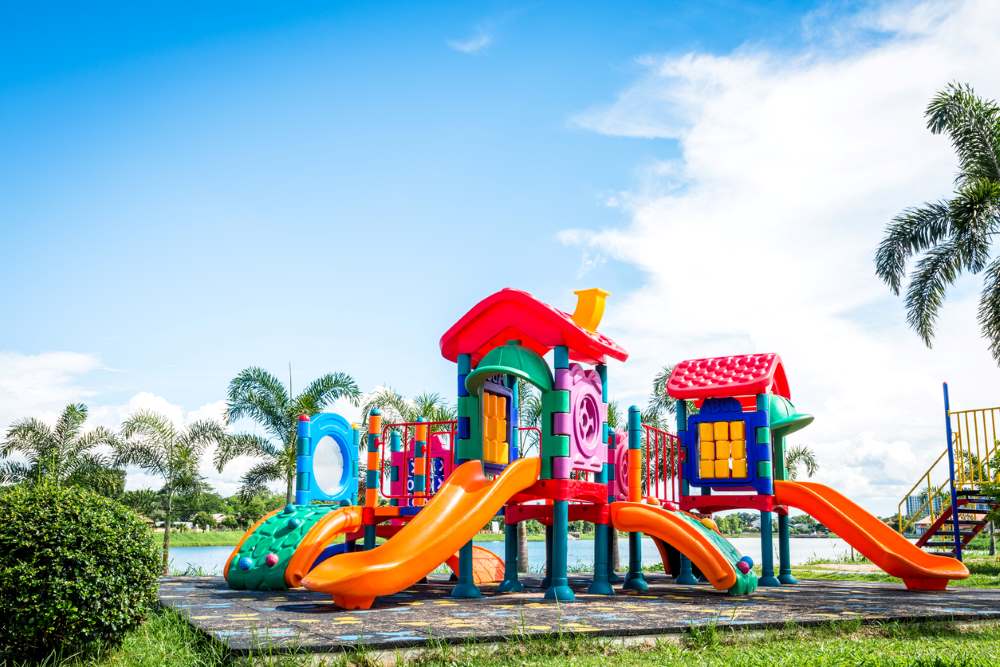
Playgrounds nurture children’s cognitive and physical development during the primary years of growth. While they are intended to bring joy and fun to children’s lives, they must be safe and age-appropriate. Keep reading to learn the importance of a safe and developmentally appropriate playground and tips for recognizing one at your child’s school or daycare facility.
Why is a Safe, Developmentally Appropriate Playground Important?
Before you can recognize a playground that’s age-appropriate and safe for your child, you need to understand why this type of playground is important. First and foremost, your child’s safety is at risk if they’re playing on a poorly maintained, outdated playground. Loose screws or bolts, worn-down surfaces, and ungated areas can pose dangerous risks to little ones. Safe playgrounds prevent injuries from occurring in the first place, reducing trips, falls, and spills.
Second, an age-appropriate playground keeps kids progressively learning and developing. If the playground equipment is for older children, they may be challenging themselves in ways that could lead to injury. A tall rope ladder, for example, is only sufficient for children who have learned how to firmly grasp onto materials. Equipment that matches children’s abilities will teach them how to develop strength, balance, and coordination safely.
Additionally, safe and age-appropriate playgrounds foster social skills amongst peers. Playgrounds provide opportunities for communication with one another, learning how to share and cooperate as they play and grow together. This helps children navigate different challenges, such as working together to make it down the steep slide or across the tedious monkey bars.
Now that you understand the importance of a safe and developmentally appropriate playground, here are some tips on what to look out for at your child’s school or daycare.
Safety Certifications
Schools and daycares recognize the importance of keeping children safe. When touring a school or daycare, ask a representative about safety certifications for the play equipment. Certifications from organizations like the Consumer Product Safety Commission (CPSC) and the American Society for Testing and Materials (ASTM) ensure safety at the highest standards. The International Play Equipment Manufacturers Association (IPEMA) is also a reliable source of standards. This non-profit organization tests and verifies playgrounds to ensure the highest safety standards.
Note, these certifications aren’t typically posted on the equipment itself. It may be on the manufacturer’s website, or product documentation that the school or daycare has available. However, certified inspectors who have been trained to identify potential hazards should have documents and certificates at the ready.
Separate Play Areas
A good indicator that the playground is set up for multiple ages is if it has separate play areas. Different zones allow children within different age sets to play within the same area, but on age-appropriate equipment. Toddlers, for instance, can play on low-level areas with sandboxes and activity panels. Bucket swings and small slides are also appropriate for this age group. Slightly older children can benefit from taller equipment, including bigger slides, regular swings, rope ladders, and spinners.
Having distinct play zones is important for supporting children’s holistic development. Different zones offer activities with a range of physical activities, helping them develop gross and fine motor skills. These zones also ensure that children are matched with peers of their age. This can be beneficial at large daycare facilities and schools where children will likely interact with those outside of their designated classes.
Also, having different play zones will keep kids mentally and physically challenged. As they grow and develop, the playground will grow with them. Regardless of their interest or capabilities now, these will likely change as they mature and find new ways to engage.
Well-Designed Surfaces and Surroundings
Another important component to be aware of is the surfacing and surrounding areas within the playground. Protective surfacing such as wood chips, recycled rubber mats, or engineered wood fiber are all good options that can brace the impact of falls. These materials should be replaced regularly, especially on playgrounds with a high level of usage. Exposed rocks, roots, tree stumps, and other tripping hazards should also be addressed.
In terms of the surrounding area, it’s recommended that gates be placed around the perimeter to prevent children from running off. This is particularly important if there is a parking lot nearby or a busy road. Gates also keep children confined in the area, making it easier for teachers, counselors, and other attendants to keep watch of them while they play.
Related to surroundings is having adequate clearance between equipment. It’s suggested that at least 6 feet in all directions around stationary equipment. However, taller equipment such as high slides or climbing walls may need at least 9 feet.
Conclusion
As a parent or caretaker, being aware that the playground your child is on every day is both safe and age-appropriate for them. While accidental falls and stumbles are bound to happen, you want to know that every precaution is there to prevent serious injury. Be upfront with the selected daycare or school and ask specific questions to the appropriate representative. A daycare owner or a school board member should be aware of any concerns that you may have and be able to address them immediately. It’s better to ask about them now instead of regretting not asking about them before a child gets hurt.