



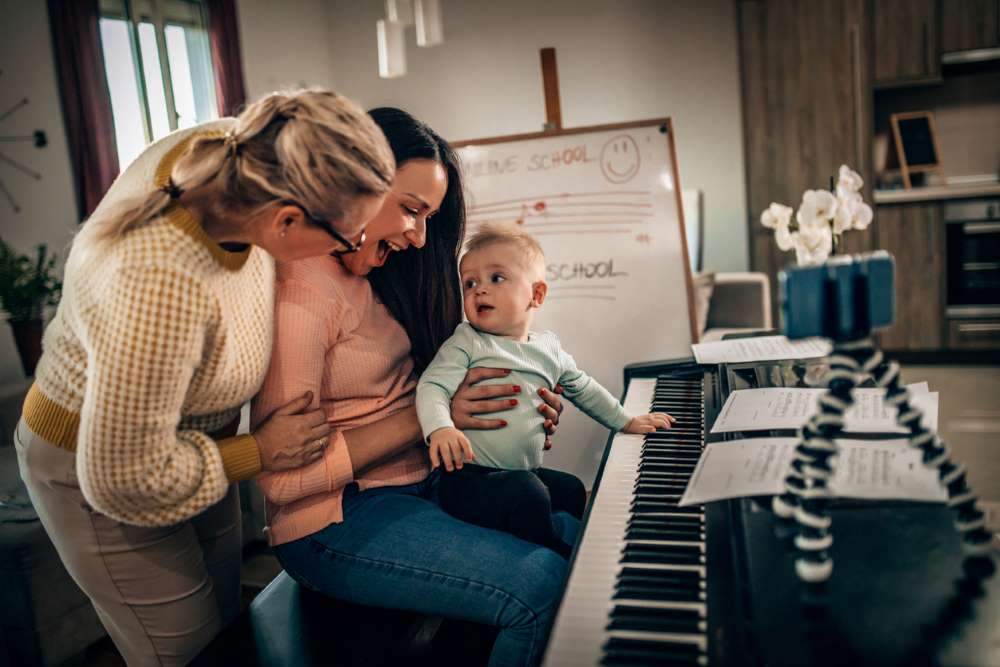
Since ancient times, music played an important role in our culture. If you pay close attention, you will see that music is present in many aspects of people’s lives: movies, theater, holidays, workplace, celebrations, and so on. People mostly listen to music when they are at home. It is a natural part of the everyday experiences.
Ever since kids arrive on this earth, parents impulsively use music to calm their babies, express love and joy. Music is a good way to keep kids engaged in activities and interact with others. These natural instincts are built by parents to teach their children important social skills.
Generally, children start to identify rhythm very early in their lives. Indeed, music is made to touch people’s souls. Besides, music provides many benefits that support children’s development. In this article, you will find many reasons why music can be a good friend in the development of your child.
The benefits of music on the brain
Studies found that music in childhood can quicken brain development, especially in language and reading skills. Helping your child learn how to play an instrument can really improve their focus at school and increase SAT scores. Music can play an important role in academic achievement, but this isn’t the only benefit. It can improve all areas of child development, including social-emotional and intellectual skills. Music creates a tunnel between the body and the mind.
Parents must expose children to music during their early development, so they can learn the meaning of sounds and words. Along music, dancing and singing helps children practice self-expression. But music is beneficial for adults as well, as this helps them strengthen their memory skills. Additionally, music can bring us joy: just listening to a nice song can make our day beautiful and relaxing.
Music games for kids
Kids of all ages express themselves best through music. Young kids like to move using their hands in response to music. Many children even make up songs with no self-consciousness. They like to sing while they play. In elementary school, children like to sing, play, and dance together as a group. Most of the times, they learn how to play an instrument. Other children dance to the music they most like, and use it to form relationships with others and express feelings. Try these activities with your child and teach them how to have fun and learn from music. Find more music at Melody Loops music – there’s a great variety of songs you can choose from.
Children can recognize songs long before they understand the lyrics. Background music can help your children relax, especially at sleep time. Most parents complain about the fact that they can’t find solutions to calm down their babies at night. Singing simple and short songs to your kids can help them fall asleep faster. But luckily, internet can provide us many possibilities to make our job even easier: try play them music before sleep time. There are thousands of songs for infants online, you’ll even find it difficult to choose just one.
The emotional benefits of music
Music can be very enjoyable; we all agree on that. Research suggest that music might even make you healthier. It can be a source of preference and joy – music can help relax your mind, muscles, and improve your mood. People in pain can use music to reduce it. It’s known that music can influence your feelings, thoughts, and behavior. But this does not come as a surprise. If you have ever been influenced and touched by music, then you can simply understand the power that music has on your mood.
The same goes for toddlers – music can improve cognitive performance. Children are attracted by colors, textures, and taste. So, music can help them be more creative, as long as they’re engaged in different activities such as dancing and singing. In their early age, babies can notice the difference between different sounds. After a couple of months, a baby is able to identify their parents’ voice. Music can enhance a kid’s natural capability to notice sounds and words.
Singing songs to your child ever since he or she is a toddler will help them identify sounds and learn through repetition. Music helps toddlers learn what comes next in a song, as they know how to place these patterns into an order. Mastering these skills means that your children can build a base of knowledge and skill.
Music can lift mood
Music has satisfying rhythms and tunes, which makes most people gather together and have fun together. We’ve all created a connection with music – a nice song can make us feel a lot happier or sad, depending on how we feel. Scientific studies have shown that the connection between music and mood is very powerful. Music can increase the serotonin in our brains – it means that it may decrease the level of stress in the body. As a result, music therapy is also good for:
-
Improving sleep
-
Creating a positive mood
-
Increasing energy
-
Reduce stress
-
Reduce anxiety
-
Improve self-confidence
Even if your child does not understand completely the lyrics of a song yet, it’s important to keep playing them music to encourage developing their motor skills. If you find songs with very entertaining rhythm, you will also help them starting to dance, which is great for strength and balance.
Even though your child might not be able to understand the lyrics of a song, they will still develop their understanding by recognizing the storytelling of a song. They will grow and start to realize that those words and each sound is a storytelling. Try to play their favorite songs, and encourage your child to keep up with the rhythm. Children are motivated to learn new songs and dance moves in their early stages of life. Take your child in playgroups – it’s the perfect environment where your kid can socialize and discover the joy of music.