



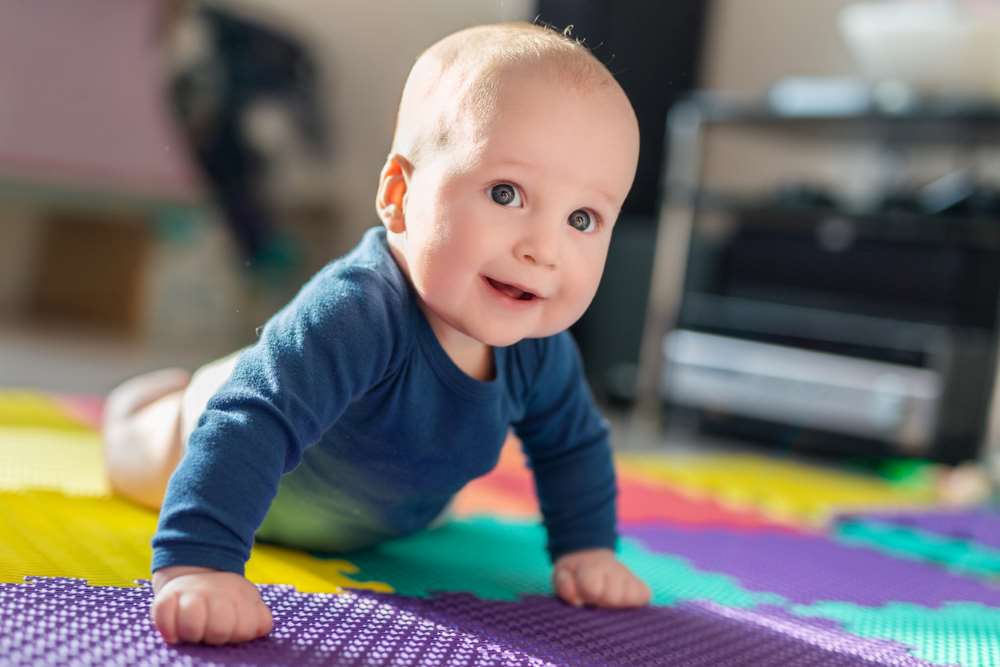
If you want to understand your child, start by joining them on the ground. It sounds simple, but lowering yourself to their level shifts everything about how you connect, communicate, and care.
Parenting at ground level is more than playtime. It is a mindset of presence, curiosity, and humility. When you sit beside your child, you stop observing from a distance and begin sharing the moment. It is quiet, sometimes chaotic, but always real.
The floor is where growth begins. It is where a baby learns balance, a toddler discovers confidence, and a parent remembers patience. The mat becomes a bridge between two worlds, one learning to stand and another learning to slow down.
Connection Begins at Eye Level
Getting down on the floor rewrites the script between parent and child. When you sit next to your little one on their play mat, you stop managing from a distance and start experiencing it with them.
Developmental experts call this approach “floor time.” It is a simple but powerful practice of joining your child in their play space, following their lead, and responding to their cues. The Centers for Disease Control and Prevention notes that positive, responsive parenting strengthens communication, supports emotional regulation, and builds stronger relationships between parents and children.
When you’re at eye level, you notice things you would otherwise miss: how their fingers hesitate over a block, how their eyes light up at a sound, how their breath changes when they focus. These small signals build understanding. They remind your child that you are not just watching, but truly paying attention.
Movement, Learning, and the Ground Beneath Them
Every reach, roll, and crawl is a form of progress. Babies and toddlers explore with their entire bodies. They fall, stretch, and push until their world feels a little more familiar. A soft play mat becomes their safe laboratory for trial and error.
According to the Centers for Disease Control and Prevention, movement during infancy and early childhood plays a vital role in bone strength, muscle growth, and brain development. The American Academy of Pediatrics also encourages daily tummy time and floor play, noting that these activities help babies develop essential strength and coordination for later milestones like crawling and walking.
When parents sit on the floor nearby, children gain confidence. They know they can experiment and take small risks because someone they trust is close. That sense of safety fuels independence. It also builds resilience, teaching children that setbacks are temporary and curiosity is worth pursuing again and again.
A Mat Is More Than a Surface, It Is a Stage
A good play mat is not just for comfort. It is an open invitation to explore, create, and connect. It is where your child learns that the world can be soft and forgiving.
When you sit on the floor together, you begin what the Harvard University Center on the Developing Child calls “serve and return.” Each time your child reaches, babbles, or gestures, and you respond warmly, you strengthen the pathways in their brain that support communication and emotional intelligence.
These small interactions form the foundation for long-term confidence. A shared laugh, a gentle response, or a mirrored movement teaches your child that they are seen and valued. The mat becomes the space where love takes physical shape. It reminds both of you that connection does not depend on perfection, it thrives on closeness. When life feels rushed, a few minutes on the mat can recalibrate the entire day.
Keep It Clean, Keep It Consistent
A play mat only works when it feels inviting. Daily life can make that tricky, but consistency matters. Wiping it clean, keeping it fresh, and maintaining a sense of order helps everyone feel more at ease.
You can use mild soap and warm water for daily upkeep and plan a deeper clean once a week. Avoid harsh chemicals and allow the mat to air dry completely. For a simple, effective routine, explore these tips for cleaning your baby play mat in this Wunderkids blog.
When your mat looks and feels cared for, you will naturally spend more time there. That consistency turns small moments into daily rituals. It becomes the place where you both return. to play, to rest, and to reconnect. Over time, those routines create a rhythm that grounds your home in calm, intentional togetherness.
Stillness Speaks Louder Than Effort
Parenting today often feels like a performance. We fill schedules, multitask through milestones, and confuse presence with productivity. Yet some of the most powerful growth happens in the quiet space of simply sitting still.
The Child Mind Institute explains that mindful parenting, being fully present and aware during everyday moments, helps parents respond with calmness, patience, and empathy. When you slow down long enough to observe your child without judgment, you create a sense of safety and connection that shapes how they see themselves and the world around them.
This kind of stillness teaches your child that they do not need to compete for your attention. They learn that love is not a reaction to performance, but a state of being. It also teaches you something equally important: that presence is more powerful than perfection. A few minutes of stillness on the floor can accomplish what hours of structured activity cannot, genuine connection.
The Ground Rule That Lasts
As your child grows, they will move away from that mat. Their curiosity will stretch beyond the living room floor, into classrooms, parks, and friendships. Yet everything they learned beside you will follow them.
The sense of safety. The rhythm of patience. The understanding that mistakes are part of progress.
Parenting at ground level is not about lowering your expectations. It is about raising your awareness. It reminds you that connection happens through proximity, not pressure. When you sit down beside your child, you say, without words, “I am here with you.”
So roll out the mat. Sit, breathe, and let the noise of the world fade. Because the best parenting does not happen when you stand tall and direct. It happens when you kneel, listen, and let love lead the way. The ground may be where children begin, but it is also where families grow strongest together.